
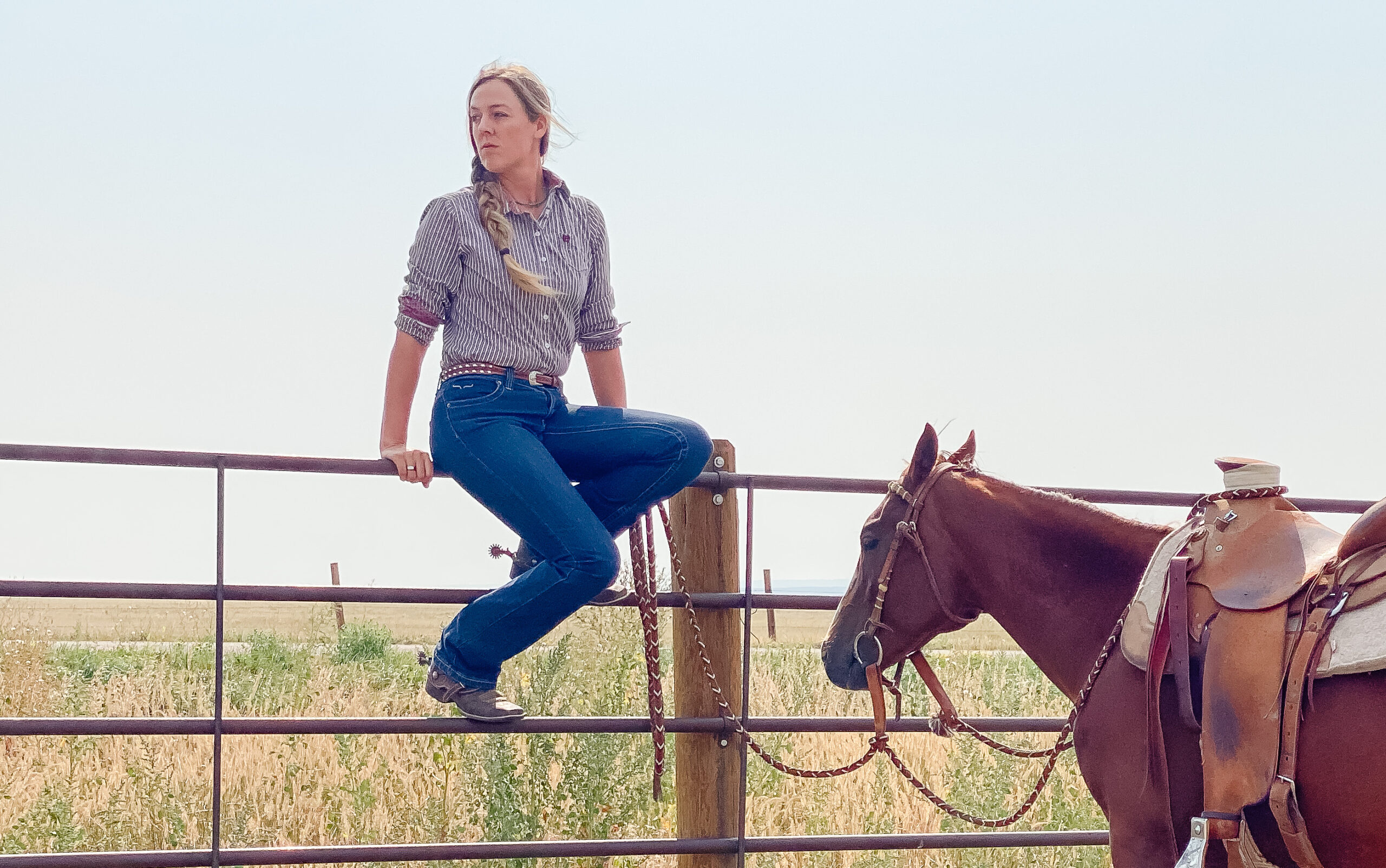
I’ve been homesteading for almost 20 years.
And I’ve changed my mind about a LOT of things.
When I first started this whole homesteading adventure back in 2008, I had some pretty strong opinions about what the lifestyle should look like.
Grow your own food. Make everything from scratch. Preserve as much as possible. Learn ALL the skills. Do it yourself whenever possible.
And I went all in.
I milked cows, raised animals, canned mountains of food, baked sourdough, grew gardens, and experimented with just about every old-fashioned skill I could get my hands on.
I loved it. (Well, most of it…)
And I still do.
But I’m not the same person I was when I started.
I’ve lived through different seasons, raised kids, built businesses, and learned a whole lot about what works and what doesn’t.
And somewhere along the way, I realized something:
You’re allowed to change your mind about homesteading.
You’re allowed to decide some things are no longer worth your time. You’re allowed to take shortcuts. You’re allowed to keep the parts you love and ditch the rest.
That doesn’t make you any less of a homesteader.
In fact, I think it makes you a smarter one.

Why My Approach to Homesteading Has Changed
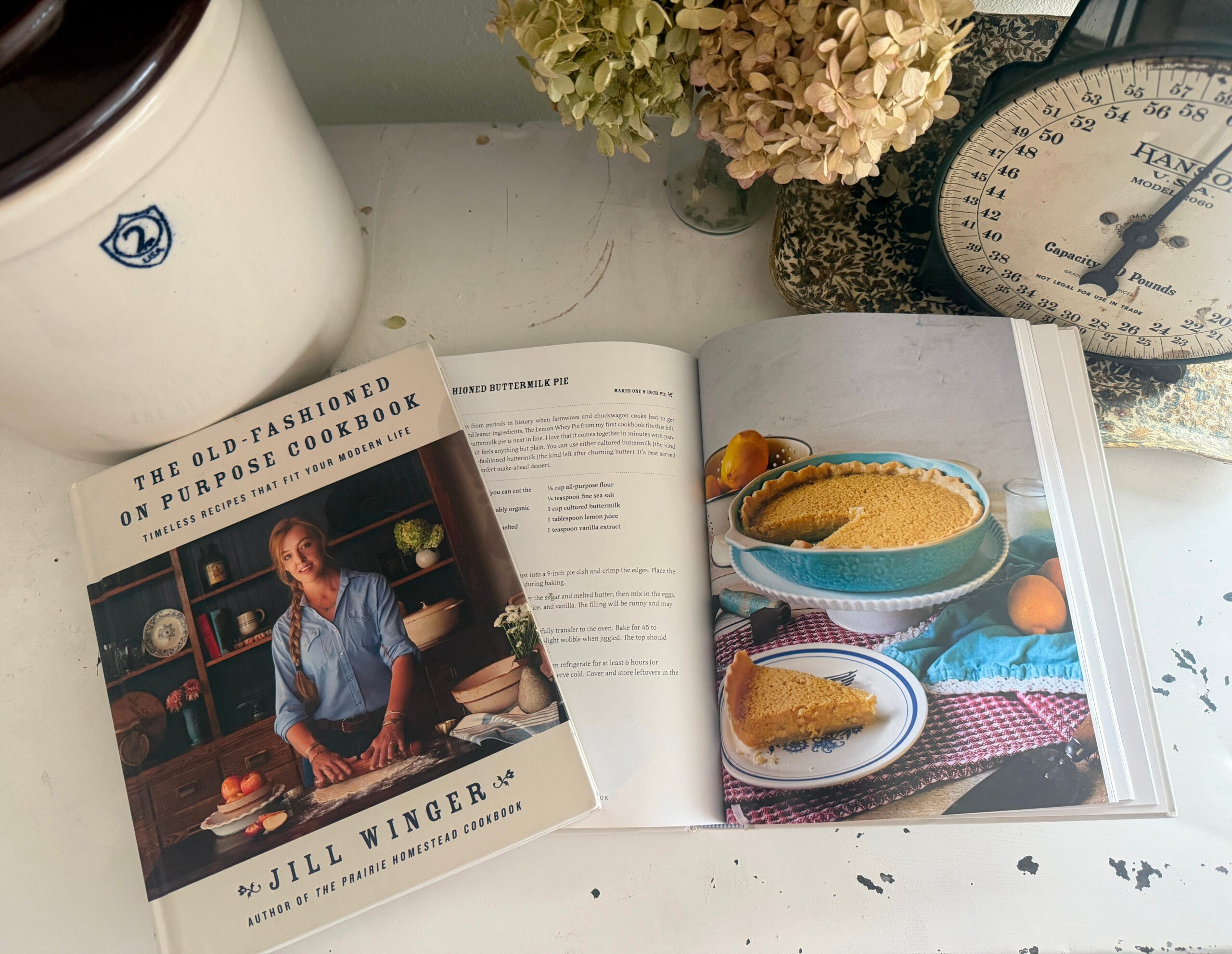
I think I finally figured out my approach to homesteading changed when I started writing my second cookbook, Old-Fashioned on Purpose Cookbook.
When I wrote my first cookbook, The Prairie Homestead Cookbook in 2017–2018, I was in a very different season of life.
Same core person, yes. But a different kitchen. Different rhythms. Different ages of kids. And a different version of homesteading.
Needless to say, I’ve changed a lot since then, even beyond the few more wrinkles and grey hairs…
You start to notice what really adds value.
You figure out which projects are worth the effort and which ones just create more work.
And eventually, you realize that making everything harder doesn’t automatically make it better.
Here are some of the biggest ways my homesteading philosophy has changed:
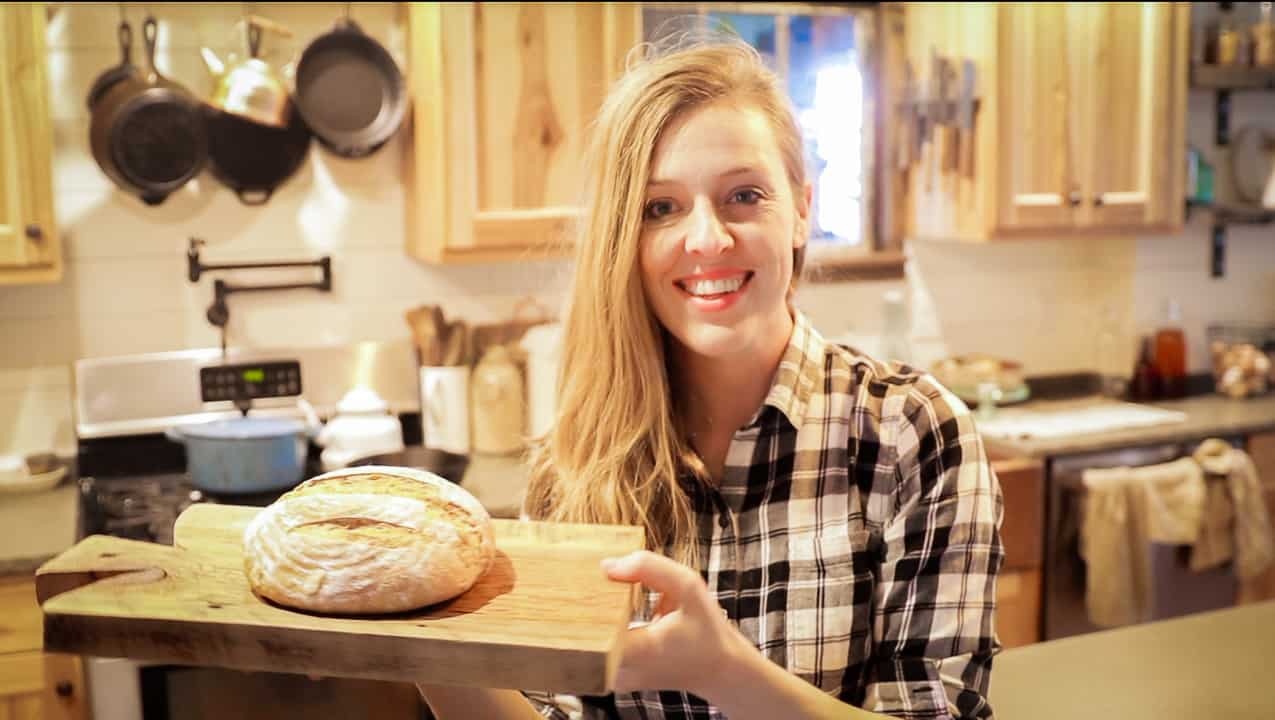
1. I’m Much Less Fussy About Sourdough
I still love sourdough.
But I no longer believe sourdough needs to take over your calendar—or your personality.
There was a time when I could get pretty intense about things like maintaining the perfect starter and making everything the right way.
(And I do still think it’s a good thing to learn a proper sourdough starter technique, even if you end up adjusting things to fit your schedule).
These days? I’m more interested in good bread that works with my actual schedule.
Sometimes that’s a long-fermented sourdough loaf.
Sometimes it’s a simple yeast bread (like this all-purpose dough or this easy dutch oven bread).
And sometimes I buy bread.
(Gasp.)
I still believe knowing how to bake bread is an incredibly useful skill. But I no longer believe you need to exercise that skill every single day to prove something.
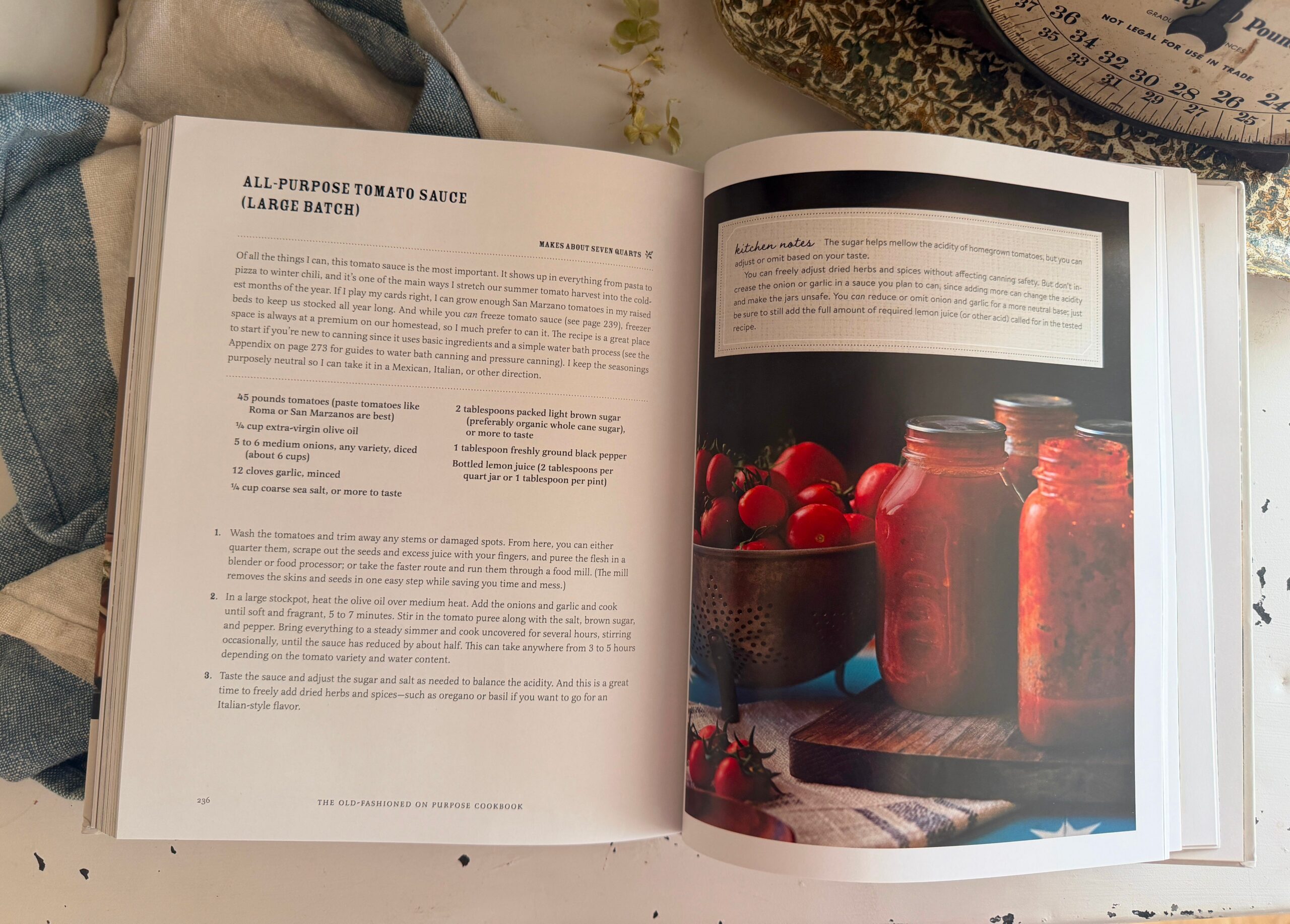
2. I’m More Selective About What I Preserve
I used to get a lot of satisfaction from looking at rows and rows of home-canned food.
And I still do, to a degree.
But I’ve become much more selective about what deserves a spot on those shelves.
Because there’s a difference between preserving food just because you can and preserving food that actually makes your life easier.
These days, I’m much more interested in putting away ingredients I know we’ll use.
Tomato sauce. Beans. Broth. Meat. The building blocks of meals.
I care a lot less about having 47 varieties of novelty jam that nobody actually eats.
(Ask me how I know…)
The goal isn’t to have the prettiest pantry. It’s to have a pantry that works.
And if that means preserving fewer things but using more of what I’ve preserved? That’s a win in my book.
3. I’ve Learned That Flexibility Is One of the Most Valuable Homesteading Skills
When I first started cooking from scratch, I was much more dependent on exact recipes.
I needed instructions. Measurements. Specific ingredients.
Now, after years of cooking, I’m much more comfortable working with what I have.
It’s that comfortable rhythm you earn after enough years in the kitchen—where you stop needing exact instructions for every meal and start cooking more by feel.
And honestly? I love it.
It’s my version of the elusive flow state.
Instead of stressing over a missing ingredient, I substitute something else.
Instead of following a rigid meal plan, I look at what’s in the pantry and figure out what makes sense.
Instead of constantly chasing new recipes, I rely on flexible meal frameworks that I can adapt.
This approach has made cooking from scratch far more enjoyable and sustainable for me.
It’s also one of the big ideas behind my Old-Fashioned on Purpose Cookbook, which includes flexible recipes like Supper on a Sheet, Flexible Empanadas, Garden Stir-Fry, and a go-to vinaigrette formula.
I want people to become more confident and capable cooks—not feel chained to a recipe card every night.
In addition to some recipes in my new cookbook, I have an entire recipe collection for flexible meal frameworks called Meal Craft. Learn more about Meal Craft here.
4. I No Longer Think I Have to Do Everything Myself
There’s a certain kind of pride that comes with doing something yourself.
I know that feeling very well.
And I still love learning new skills, tackling projects, and figuring out how to do things that initially feel impossible.
But I’ve also learned that time and energy are finite resources.
Sometimes it makes sense to build something yourself.
Sometimes it makes sense to hire someone who knows what they’re doing.
Sometimes growing your own food is enormously satisfying.
And sometimes buying it from another farmer—or even the grocery store—is the right choice for that season.
Being capable doesn’t mean you have to personally do every single thing.
It means you have options.
And the more I live this lifestyle, the more valuable those options become.
5. I Stopped Confusing “Harder” with “Better”
This might be the biggest shift of all.
For a long time, I think I subconsciously equated doing things the hard way with doing things the right way.
If something took more effort, it must be more authentic.
If I made it from scratch, it must be better.
If I could do it myself, I should.
But I’ve become increasingly intolerant of unnecessary fuss.
These days, I have a much sharper filter for what deserves my time.
If homemade tastes better? Great.
If it saves money? Great.
If it teaches me a useful skill, helps me use what I already have, or makes me more capable?
Even better.
But if doing something the hard way just makes me tired?
No thank you.
I don’t need to make my life unnecessarily complicated just to prove I’m committed to old-fashioned living.

6. I Still Love Homesteading. I Just Have Different Priorities.
Here’s what hasn’t changed.
I still love feeding my people.
I still believe there is something urgently important about knowing how to turn basic ingredients into real food.
I still want dirt under my fingernails, meals around a table, useful skills in my repertoire, and a life that stays connected to the seasons and the soil.
And in a world that gets more abstract and robotic by the day, I still believe those things keep us human.
Actually, I believe that even more strongly now.
But the way I practice those beliefs looks different than it did 10 or 15 years ago.
And that’s okay.
My homestead doesn’t have to look exactly like the one I started with.
My kitchen doesn’t have to function the way it did when my kids were little.
My garden doesn’t need to grow everything.
And I don’t have to keep doing something simply because it’s the way I’ve always done it.

How to Build a Homesteading Lifestyle That Actually Fits Your Life
If you’re feeling burned out by homesteading—or simply wondering whether you still want to do everything you once dreamed of doing—here are a few questions worth asking yourself:
- What parts of homesteading do I genuinely enjoy? Not what looks good on Instagram or what other homesteaders say I should do. What do I actually love?
- Which skills make my life better? Maybe that’s gardening, raising chickens, baking bread, or preserving food.
- What am I doing out of guilt or obligation? Are there projects or routines I continue simply because I’ve always done them?
- Where could I simplify without losing what matters? Could I grow a smaller garden? Preserve fewer foods? Buy some things instead of making everything?
- What would homesteading look like if I designed it for my current life instead of the life I had ten years ago?
I think these are questions worth revisiting regularly.
Because your life will change.
Your family will change.
Your priorities will change.
And the way you homestead can change right along with them.
Keep the Skills. Ditch the Fantasy.
I’ve become a bit of a recovering homestead purist.
Not because I’ve stopped believing in old-fashioned skills or self-sufficiency.
Quite the opposite.
It’s because I believe in them enough to want them to be sustainable.
I don’t want homesteading to become another impossible standard we’re constantly failing to meet.
I want it to make us more capable, more resourceful, and more connected to the things that matter.
And sometimes that means doing less.
Sometimes it means doing things differently.
Sometimes it means changing your mind completely.
You don’t have to defend every decision you made ten years ago.
You’re allowed to learn.
You’re allowed to evolve.
And you’re allowed to build a version of homesteading that actually fits the person you’ve become.
Keep the skills. Ditch the fantasy.
—Jill
P.S. One of the clearest examples of how my philosophy has evolved is my Old-Fashioned on Purpose Cookbook. It’s full of practical from-scratch recipes, flexible meal frameworks, and old-fashioned kitchen skills designed for real life—not an imaginary perfect homestead.
More Deep Thoughts on Homesteading and Life:
- On Homesteading Stereotypes, and Such.
- How I (Don’t) Do it All
- When Your Life Has Too Many Moving Parts (and what I do about it)
- How I Use a Planner to Keep Our Homestead on Track

Leave a Comment