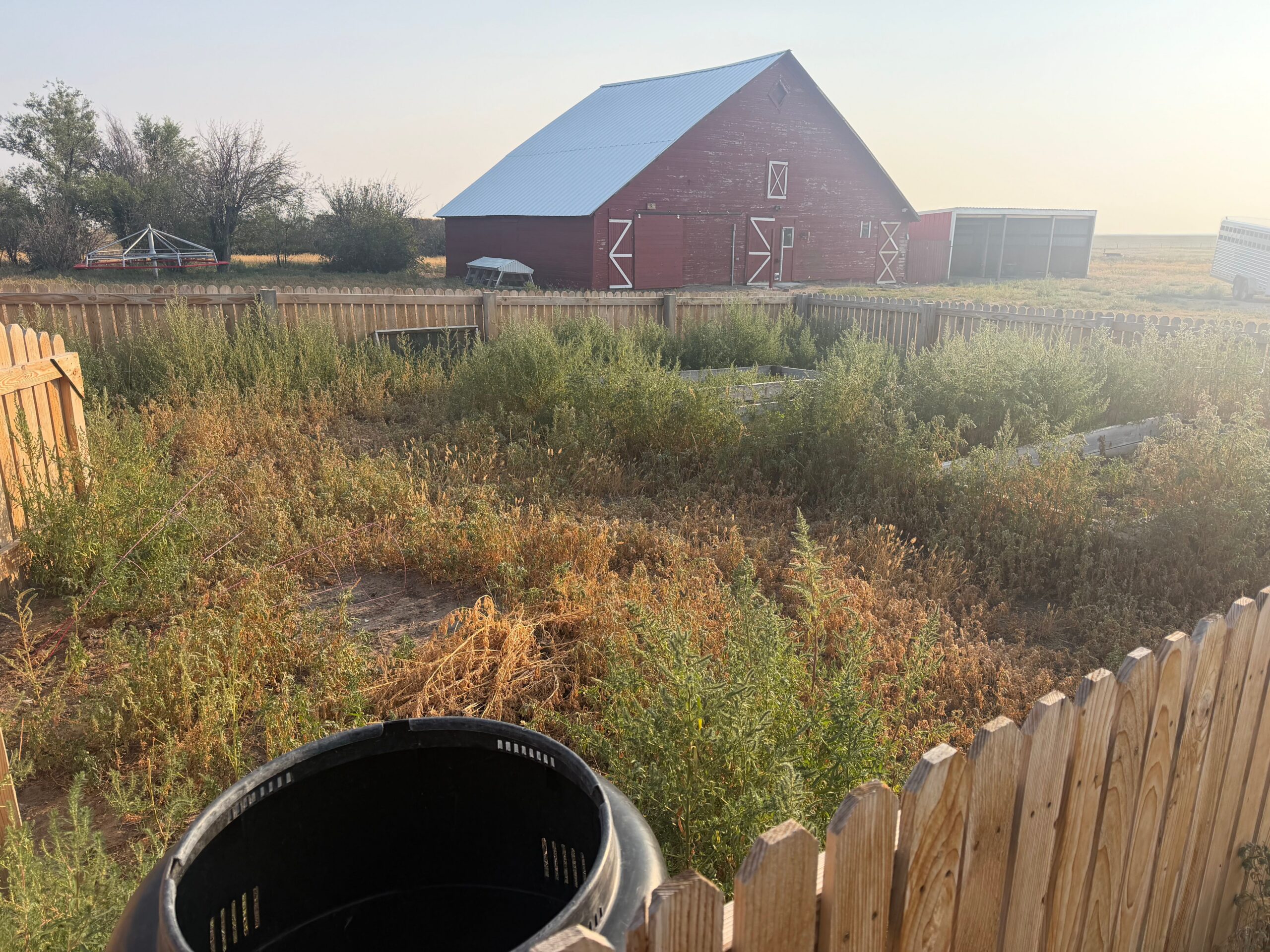
I’ve had some pretty epic garden failures over the years, but nothing quite like this.
For those who missed it, I moved to a new property this spring. It’s not far from my old place, so I assumed the growing conditions would be somewhat similar: Same high plains. Same brutal wind. Same short growing season.
How different could it possibly be?
Well…. very, VERY different, apparently.
Before I show you the full extent of my current horticultural humiliation, let me preface this by saying:
I know how to garden.
At least, I thought I did.
I have grown gardens that ended up in magazines.
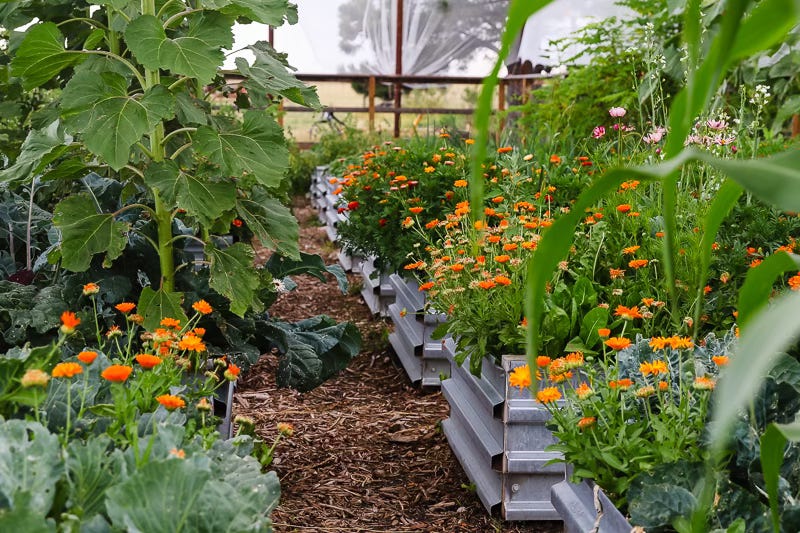
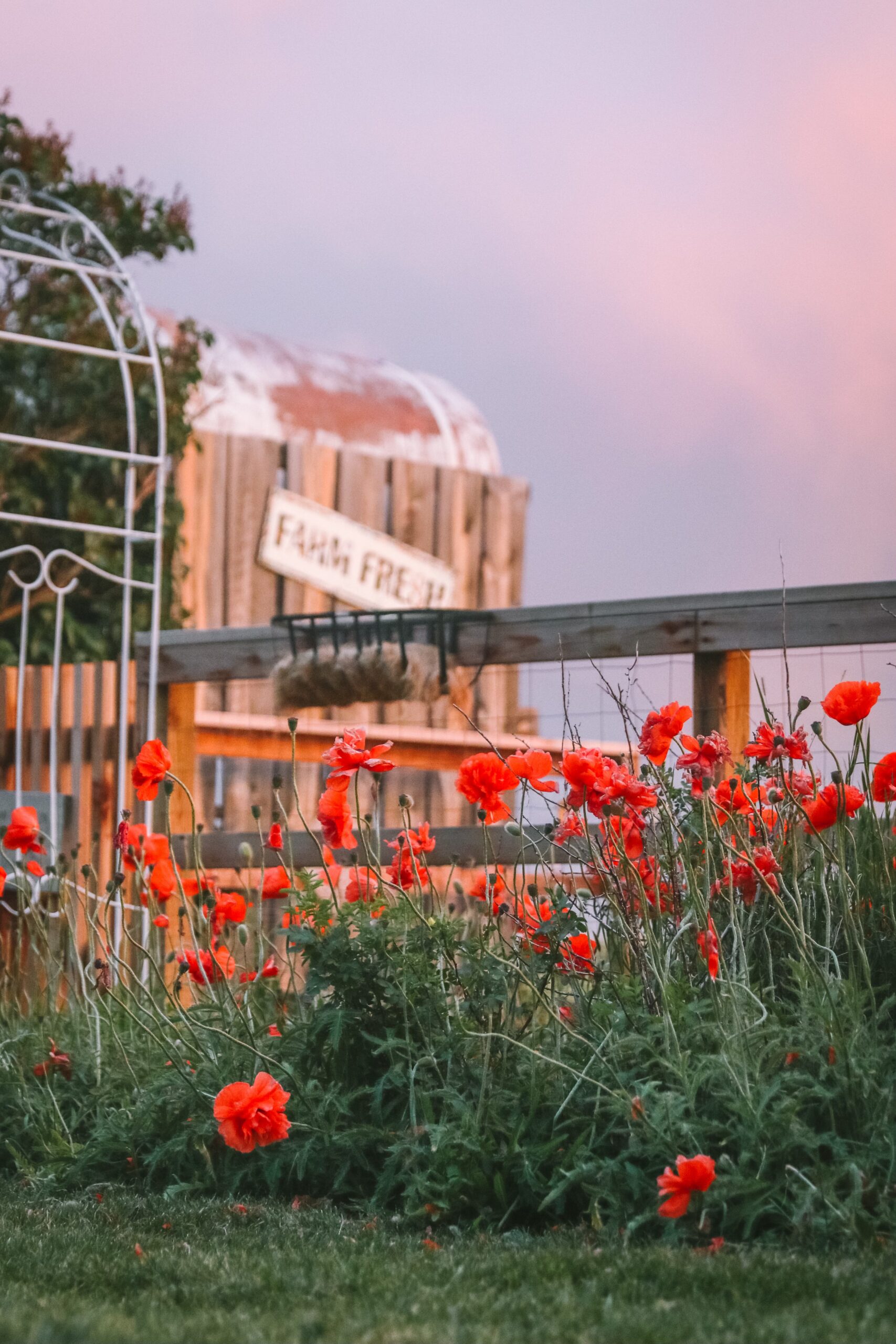
I have grown gardens that were screenshotted, reshared, and labeled with hashtags like #goals.
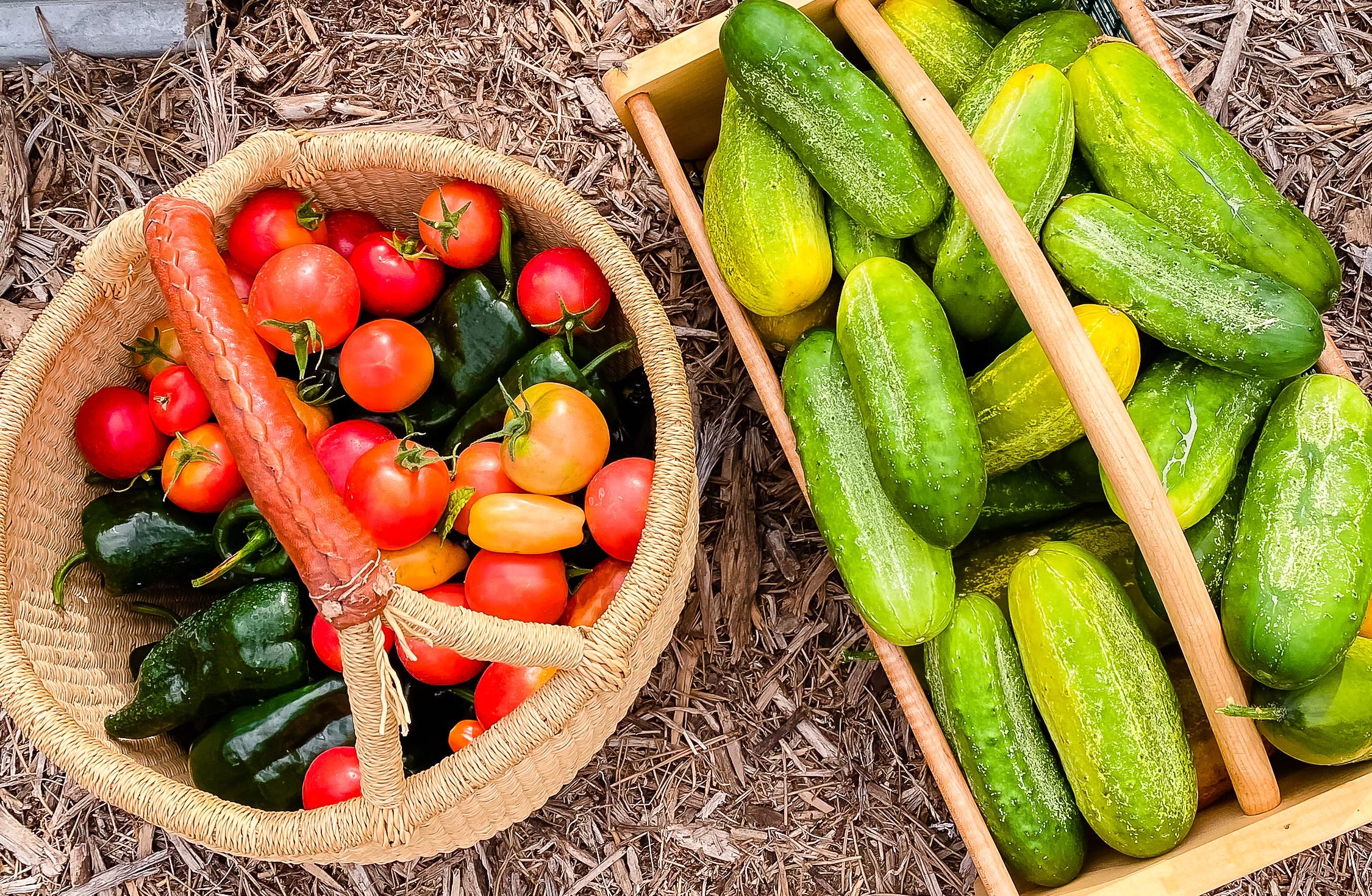
I have grown thousands of pounds of food over the years. I’ve preserved it, canned it, fermented it, cooked it, photographed it, and taught other people how to grow it.
This isn’t my first rodeo.
I didn’t intend to plant a monster garden this year. Not in the middle of moving and starting over.
But as I so poetically declared back in May, I was determined to plant my two flats of heirloom tomato starts and grow a small, humble garden for my mental health.
Ha.
HA.
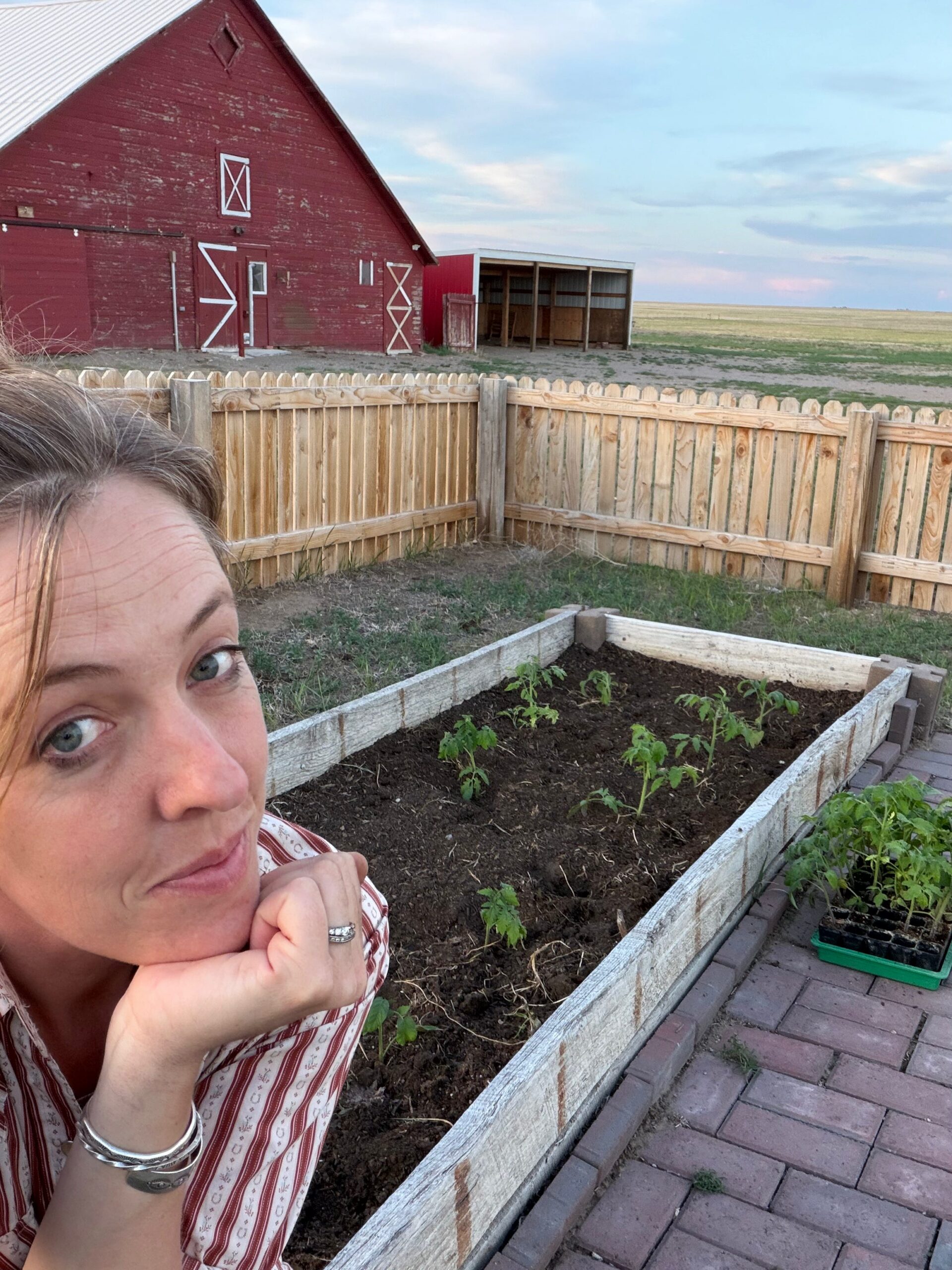
What followed that innocent little photo was an absolute horticultural disaster.
Everything either died, stayed exactly the same, or disappeared overnight.
I know I’m not the only person whose garden has failed this year. So instead of pretending I have this figured out, I’m going to show you what I’m finding as I go in hopes it will help someone else who may also be wallowing in gardening woes.
Right now, it appears three separate problems have joined forces to create the worst garden of my entire life:
Problem No. 1: Herbicide Contamination
This one is keeping me up at night.
I have dealt with herbicide contamination before, thanks to contaminated hay mulch and manure. I’ve written about it extensively on my blog, and it is a growing problem for gardeners and small farmers.
Some broadleaf herbicides can pass through an animal’s digestive system and remain active in manure for a looong time. They can also stay in hay, compost, or potting soil for YEARS before they dissipate.
Tomatoes are usually the canary in the coal mine because they are so sensitive. Their leaves will curl, cup, and gnarl. They don’t always die, but instead persist in a strange state of deformity.
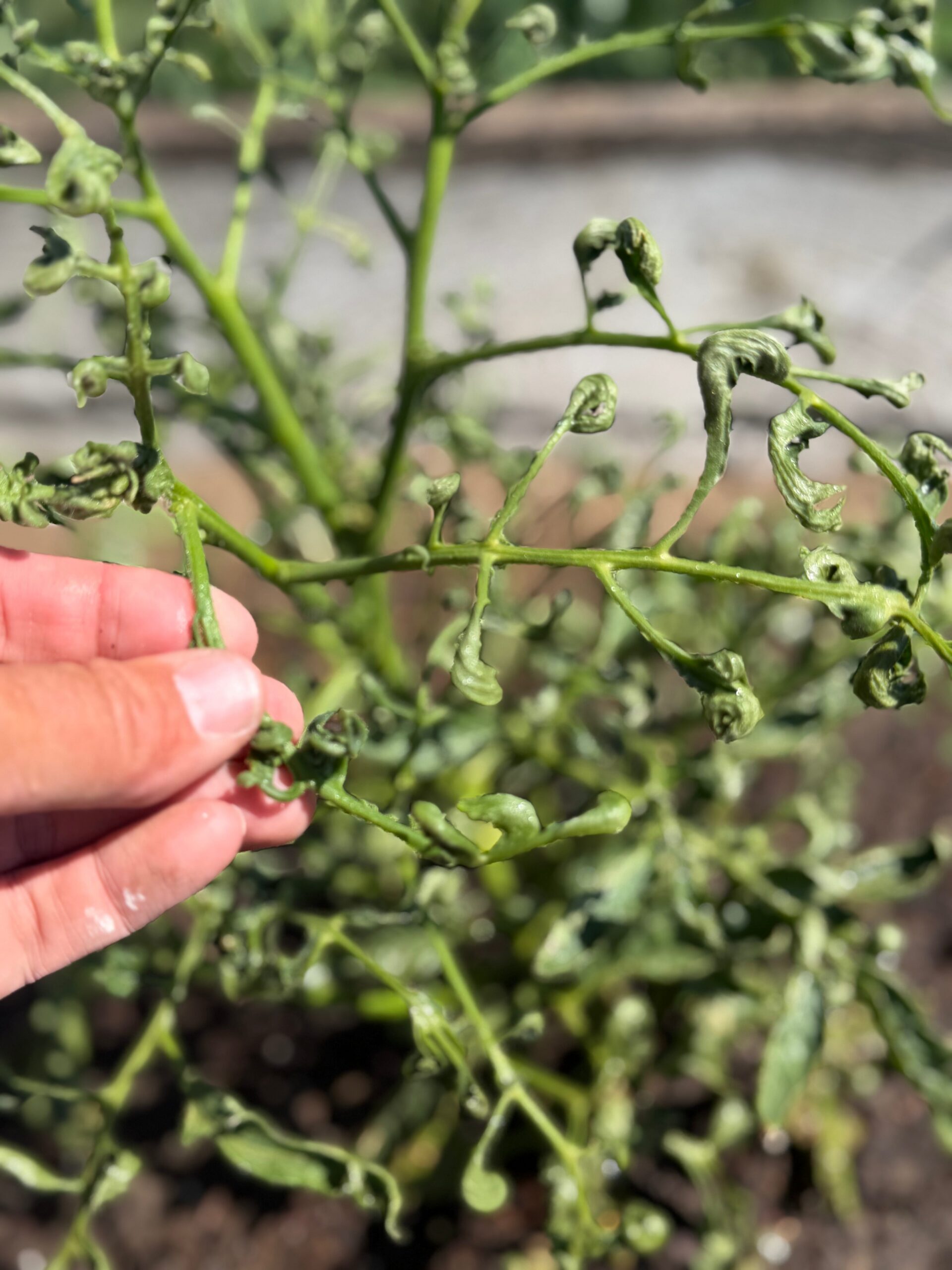
The problem is that I don’t know where the contamination came from.
I spoke with the previous owner of this property, and he said he never sprayed the garden area. He had only added bagged potting soil to the raised beds.
Now, can bagged soil or compost contain herbicide residue? Yes, but not always. It doesn’t seem to be the most likely explanation, but I can’t rule it out yet.
However, there’s another possibility that scares me more.
There is commercial farmland directly across the road from my house.
Herbicide drift (aka the movement of chemical droplets or particles away from the area where they were intended to be applied) can wipe out entire gardens or landscapes and it’s happening more and more.
However, the farmer across the road told me they didn’t spray this year, so I don’t think fresh drift from that field is the culprit.
But I do suspect a different kind of drift….
Southeastern Wyoming is experiencing Dust Bowl conditions this year. Thanks to our historic drought and continued tilling, massive clouds of dirt have been rolling across the road and onto my property.
And I don’t mean a light coating of dust. I’m talking about a thick layer of soil covering EVERYTHING.
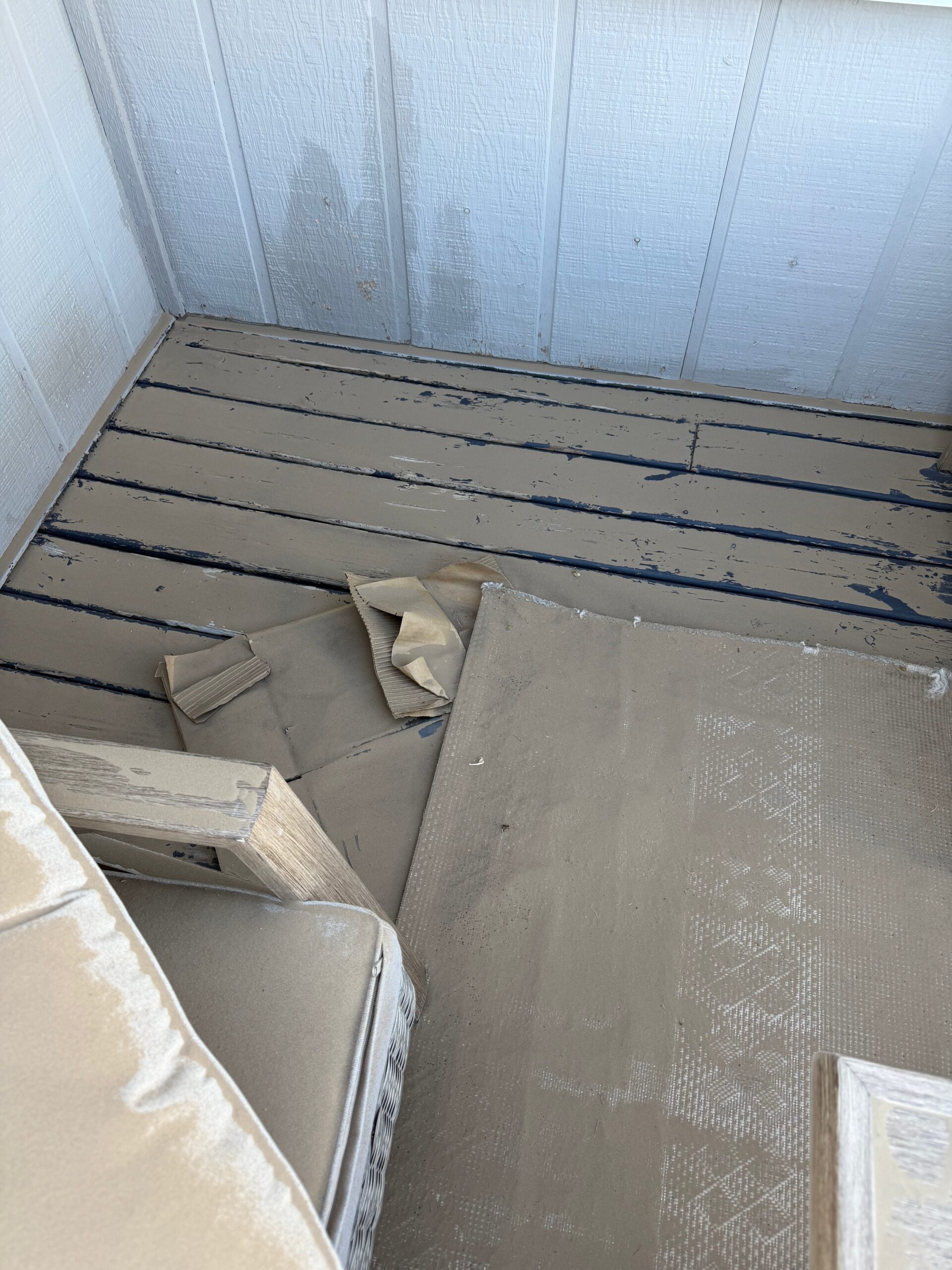
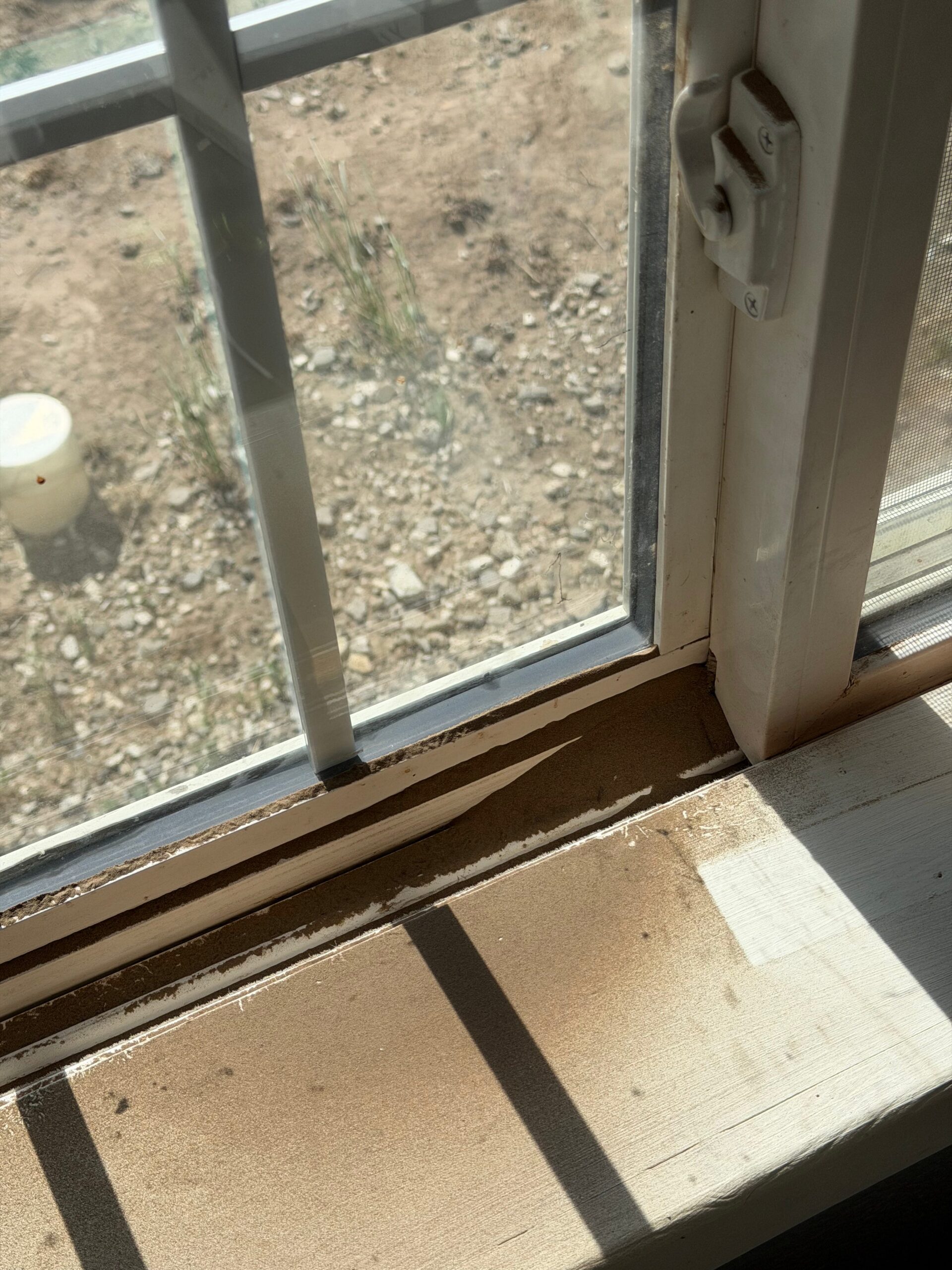
There were days this summer when I’d be only a quarter-mile from my house and couldn’t even see it because it was enveloped in a cloud of brown.
My fear is herbicide residue could be traveling in that windblown soil. However, right now, that is only a theory. I’m still gathering information instead of jumping to conclusions.
Before I can make any real plan, I need to figure out two things:
Where is this contamination coming from?
And what chemical am I dealing with?
I’ve talked to the Wyoming Department of Ag and am looking into several testing options.
More to come on this soon…
Problem No. 2: Terrible Soil Fertility
At first, I blamed everything on herbicide damage, but then I noticed something else:
Even the plants that are less susceptible to broadleaf herbicides were not growing.
They weren’t twisted or distorted, but they weren’t changing or putting on new leaves.
I also noticed that the weeds were different here. At my old place, lamb’s quarters and pigweed (aka amaranth) grew in droves. Both of those are usually associated with fertile, nitrogen-rich soil.
Here, there were no lamb’s quarters. Or pigweed. Or purslane. Or mallow.
What I have instead is kochia.
ONLY kochia.
Kochia isn’t a perfect soil diagnostic, but it thrives in dry, disturbed ground and can live in conditions where other plants struggle. It was a clue that some major nutrients were lacking here. I suspected low nitrogen, so I grabbed one of my trusty Redmond’s home soil test kits to confirm.
The results were eye-opening, but not surprising:
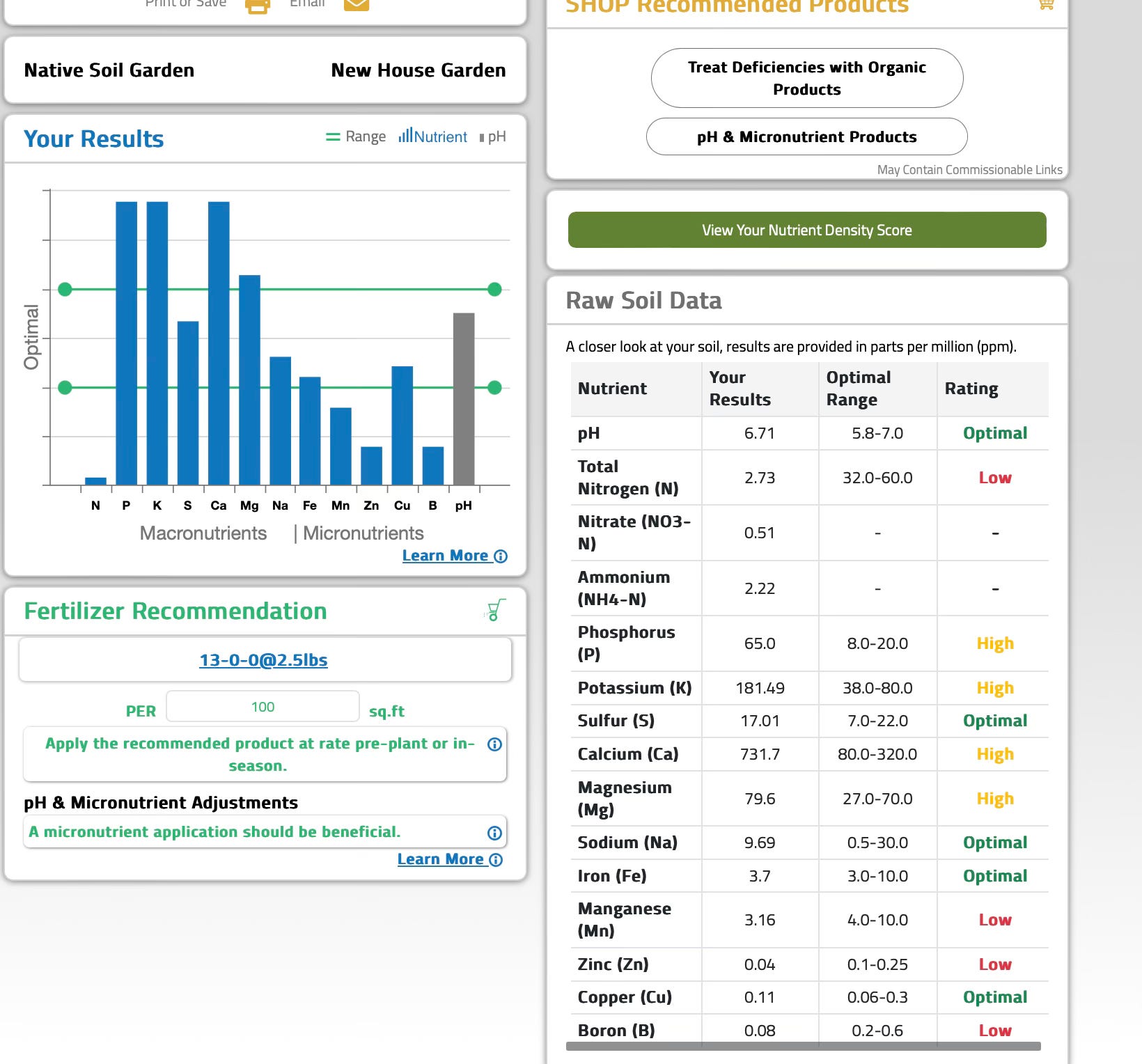
Hardly any nitrogen. Nada. Which totally tracks with the lack of growth I’m seeing in my plants.
So yes, I need to add nitrogen, but I have to be careful as my phosphorus and potassium are also WAY too high…. and just dumping a typical fertilizer or even manure on the garden will further this imbalance. Plus, it’s harder and harder to find manure that’s not contaminated with herbicides.
This will NOT be a one-week fix. Rebuilding soil is a multi-year process.
I know this.
I have taught this.
I believe it.
And now, like it or not, I get to put everything I’ve learned into practice here.
Problem No. 3: Every Animal in the County
THERE ARE SO MANY RABBITS HERE.
Anything I plant outside the fenced garden is mowed down almost immediately.
I planted a young lilac bush, and it was gone overnight. Gone.
They’ve eaten my newly transplanted elderberries. They’ve eaten perennials. They’ve eaten EVERYTHING.
(I also realized my lovely dog has been systematically eating all the blossoms off my potted flowers. When I finally caught him doing it, I was actually relieved because I had been trying to figure out how the rabbits were climbing into my tall pots, haha.)
I’ve never dealt with this much rabbit pressure before. I don’t care to massacre them all, and I won’t use poison, BUT I would also like to have a few flowers and shrubs around my house…
There has to be a middle ground between “rabbit buffet” and “concertina-wire landscaping,” but I’m still trying to find it.
If anyone has ideas, please send them my way.
So What Now?
I wish this essay ended with a triumphant reveal, but there isn’t one yet.
This is not a before-and-after story. It’s just the before.
That’s why I wanted to share it now.
So much of the internet is built around completed transformations, but sometimes you’re still standing in the problem with more questions than answers.
I will NOT be harvesting bushels of tomatoes this year.
There will be ZERO magazine-worthy garden tours or even one respectable zucchini.
But I am collecting information.
The curled leaves are information. The missing weeds are information.
The dust, the rabbits, and the wind are all information.
And eventually, information becomes understanding, which will become a plan .
And a plan with enough time, compost, fencing, and stubbornness, just might become a garden.
Just not this year.
This year, I am growing something else.
Humility, apparently.
And kochia.
An absolutely exceptional crop of kochia.
—Jill
P.S. If you want to try the home soil test kit I used, you can shop it here. Use code HOMESTEAD for 15% off. I’ve found them to be extremely useful over the years when I’m troubleshooting garden stuff. Just keep in mind they won’t test for herbicides or pesticides— just soil nutrients.
More Fails in the Past:
- I Think I Poisoned My Garden
- The 5 Biggest Seed-Starting Mistakes Homesteaders Make
- How to Reset Your Homestead After a Disappointing Year
- The BIGGEST Homestead Mistakes We’ve Made (so far)



If i were in your situation, i would consider starting an area by covering it with cardboard and 6″ of new dirt and compost to start renewing the area. The cardboard will break down and at least you will have a place to start growing. I am wondering how to test for pesticides? And the rabbits….a good dog. Maybe fence the area of your garden and start a buffer zone around it like a living hedge which would keep other things from blowing in. This does not happen over night but you are strong and determined and will build your new property each year. 🙂
I hear you regarding animals!!! I am 74 and live in town. I used to have a large garden planted directly in the ground. It became too much for me to handle so I seeded it over and now I use grow bags on my back patio. I grow tomatoes, basil, and cukes. Two reasons for these veggies are because they are my favorites and also the critters don’t bother them once they are established. Oh but not this year. Last week the dear ate most of the leaves off my tomato plants and even pulled up a cherry tomato plant by the roots and then left it lying on my patio. They then proceeded to nibble leaves off my cuke plants. I was so discouraged! Don’t know if I’ll do this any more ? Last year I had a squirrel who used my garden patio area like his own personal playground and left droppings all over. In past years I’ve had chipmunk and bunny issues. I’ve been thinking of hiring someone to build me an enclosed garden room totally covered, top too, with chicken wire. I’m likely to have insect invasion then because I’m convinced now that I can’t beat mother nature! ?
Ah, Jill. I am so sorry. My husband and I lived in the middle of very dry ranch land in Montana. (50 to 80 mph winds, grasshoppers of biblical proportions, neighboring ranchers spraying chemicals for grasshoppers or weeds, and having to haul water). I totally recognize those tomato plants. The herbicidal drift killed my potatoes, tomatoes and peppers. What was left was eaten by rabbits who hopped in the raised beds, grasshoppers, and prairie chickens. Agh! You have a great handle on the different problems. It is multifactorial. The soil test for chemicals is a very good start. Otherwise, it is nebulous. Sadly, we moved. It was too harsh of an environment to intentionally live there. We miss the wonderful people we met (good, hardy souls!). My husband and I have a saying, “How do you eat an elephant? One bite at a time.” It is a hard year for you, but you will make it. Take good care.
I hope you’re giving yourself as much grace as you are your garden! A sense of humor is terrific and long-lasting medicine. You’re doing really well, even if you aren’t experiencing it internally. Because, in having read your writing for a number of years, you just seem more joyful overall in spite of your challenges. Maybe that’s your truest self coming through? At any rate as Churchill said, “when you’re going through Hell- keep going!”
For straight nitrogen, like 12-0-0, I use blood meal. Use frugality at the base of each plant because it will burn.
Plant pea seeds now. They germinate and grow fast at summer’s end. Very, very tasty too. But they need watering so not sure of your situation in that regard. But they’ll add N to the soil and might make a good bellweather for good soil vs bad soil.
Rabbits #@%%/!!! They eat everything, even stuff you wouldn’t think they would touch. And they do it at night, all night, every night. The only 100% effective barrier is 1″ chicken wire. Or hot lead.
I hear you regarding animals!!! I am 74 and live in town. I used to have a large garden planted directly in the ground. It became too much for me to handle so I seeded it over and now I use grow bags on my back patio. I grow tomatoes, basil, and cukes. Two reasons for these veggies are because they are my favorites and also the critters don’t bother them once they are established. Oh but not this year. Last week the dear ate most of the leaves off my tomato plants and even pulled up a cherry tomato plant by the roots and then left it lying on my patio. They then proceeded to nibble leaves off my cuke plants. I was so discouraged! Don’t know if I’ll do this any more ? Last year I had a squirrel who used my garden patio area like his own personal playground and left droppings all over. In past years I’ve had chipmunk and bunny issues. I’ve been thinking of hiring someone to build me an enclosed garden room totally covered, top too, with chicken wire. I’m likely to have insect invasion then because I’m convinced now that I can’t beat mother nature! ?
My first attempt to container garden on a raised deck, due to an abundance of rabbits and deer, has resulted in 75 plant starts bolting or becoming bug food.
I’m ready to toss the lot over the deck and declare the wildlife veggie buffet is open.
Wow! I’m so sorry for the tough time you’re having but, having followed you for years, I’m sure you’re up to the challenge. I’m deeply interested to see how this progresses. As a considerably less skilled gardener, it is comforting to see that even experienced and successful gardeners can struggle with conditions and not overcome them in the course of a single season. More strength to your elbow (as my late mum would say when offering encouragement).
Hi Jill,
I’m wondering if you are experiencing 2-4D damage. It can travel a long way and just the vapors alone are enough to affect tomatoes. I have lived on our acreage here in rural Iowa for nearly 40 years. It wasn’t until 5 years ago that I experienced ANY problems with chemical drift. But there are new herbicides on the market, one of them Enlist, which contain 2-4D that can be sprayed on genetically modified crops. I lost my entire garden in 2024 to 2-4D damage. They can spray very late in the season, way past the time that you might be able to replant a garden. So I just had to tear out everything. It was sickening because everything had been looking absolutely beautiful. In 2025 the only thing that saved my garden was watering with the sprinkler while they were spraying across the road. The sprinkler helped wash off the chemical before it could damage the plants. The wind was blowing (too hard–they shouldn’t have been spraying that day) and it was blowing directly at my house and garden. There are rules, but most farmers here are in a panic to get the spraying done and don’t care, unfortunately.