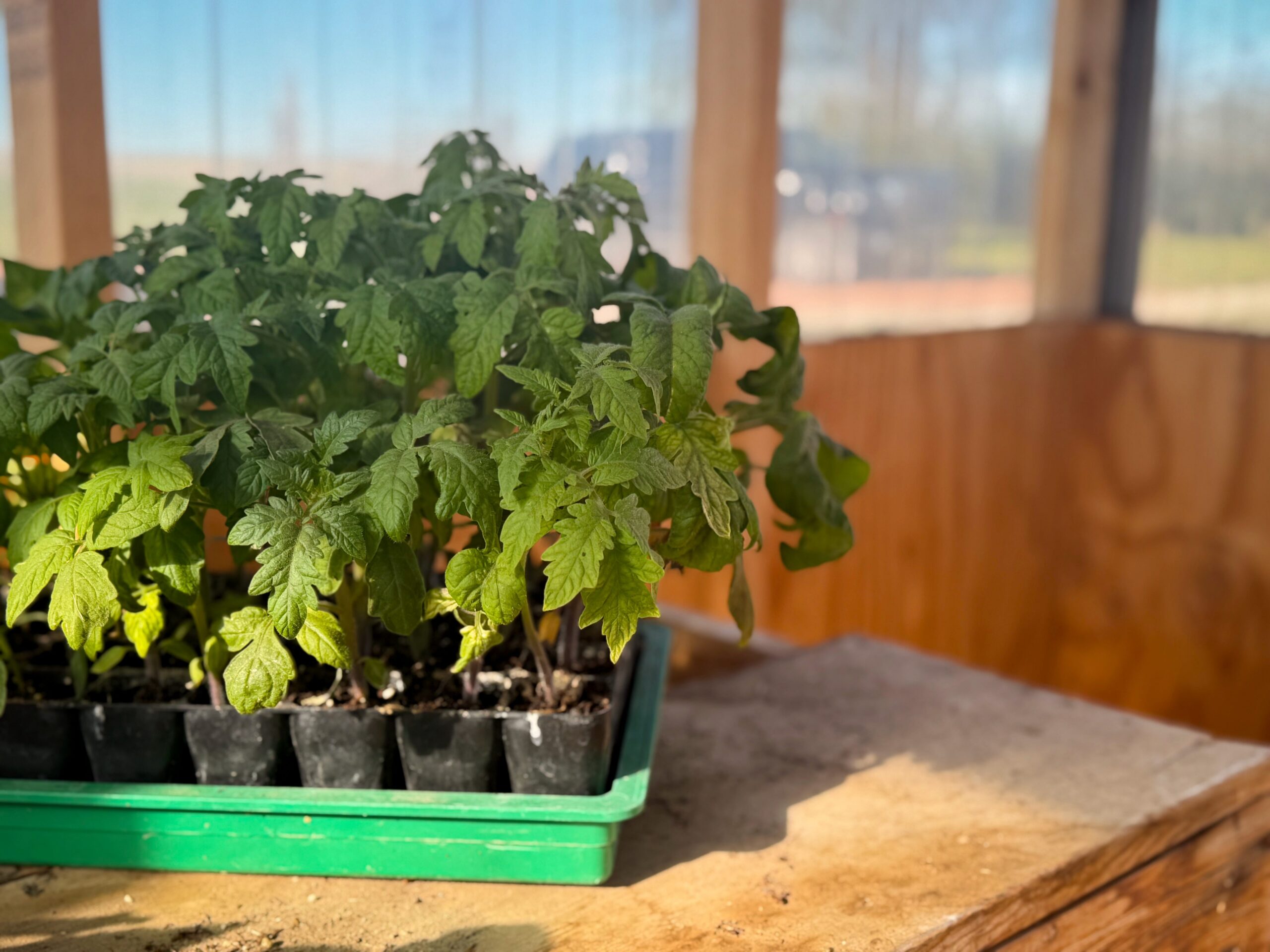
How I’m building a new garden for my new life…
I planted seeds before I knew where I was going.
I knew separation was likely. I knew life was shifting under my feet. I knew the future would probably look wildly different than the one I had imagined.
Yet there I was one blustery February morning, pressing tomato and pepper seeds into damp soil like it was any other year.
But it was not any other year. And my gut knew it.
I’ve talked here and on my podcast in recent months about how our sense of self morphs and shifts over time. We shed old pieces to make room for new layers. We outgrow versions of ourselves we once thought were permanent.
But no matter how much my life shifts, I suppose I will always be the woman who starts seeds in late winter.
Even in the midst of deep uncertainty.
Maybe especially then.
There was something steadying about planting that day, but that’s how I always feel when I’m knuckle-deep in soil. The trusty seed trays I’ve used for years. The crumpled seed packets tucked away from last season. The damp potting mix. The ordinary rhythm of it all.
It was comforting and familiar in the midst of so much unknown. And while I didn’t know what my life would look like by the time the seeds were ready to transplant, something deep inside me knew I needed to trust the promise of new life.
Fast forward a few months, those seedlings have followed me into a chapter I couldn’t have fully imagined back in February.
Last week, I gave you a glimpse of my new garden area.
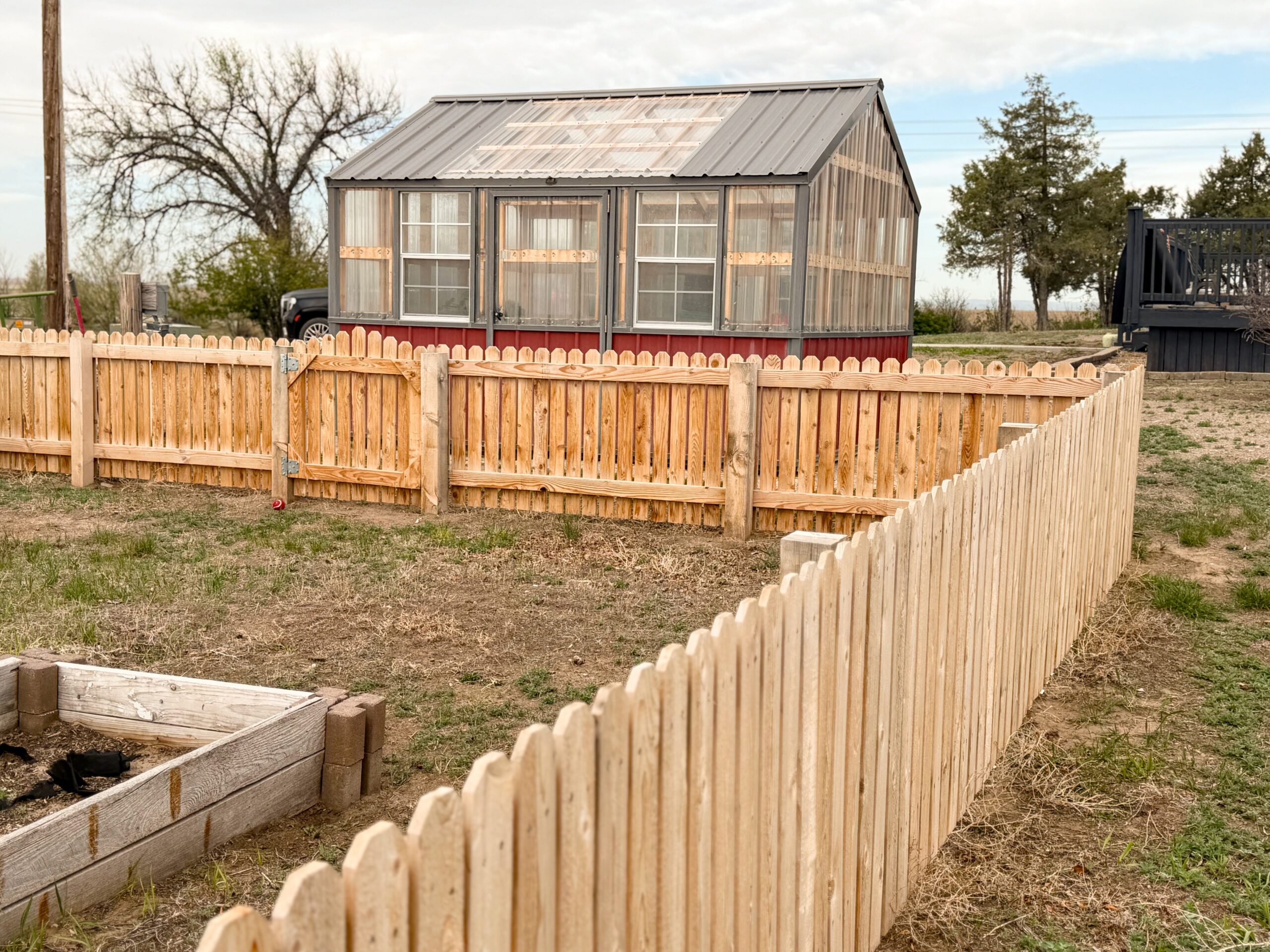
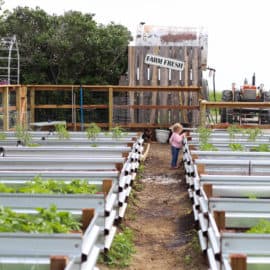
It’s quite different than the one I left behind.
Smaller and more humble.
Three tiny wooden raised beds instead of twenty shiny metal ones.
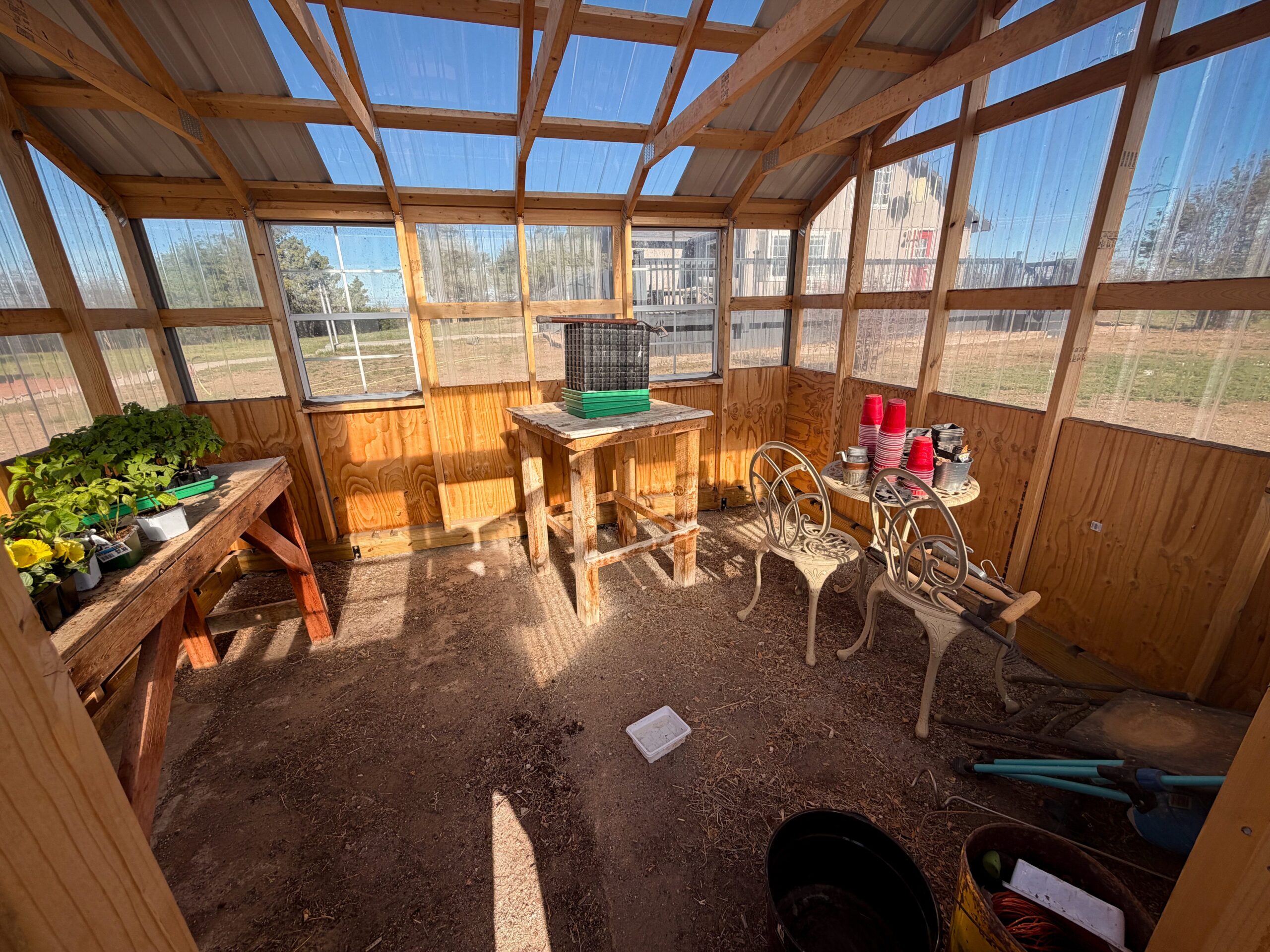
An itty-bitty red greenhouse instead of a sprawling commercial building.
And while I feel the occasional twinge of shock at how different it all is, more than anything, I feel relief.
I didn’t realize how burned out I had become on gardening.
The last few years had started to feel obligatory and monotonous, which are two words I never wanted to associate with one of the most fundamental needs of humans: connecting with our food and the soil.
But that’s where I had landed, for various reasons.
I had planned to address my burnout by taking a rest year in my big raised-bed garden— not necessarily by moving to an entirely new place. But life has a funny way of sorting things out sometimes.
So here I am: On new soil, with new views, and new beginnings.
With a very unexpected, yet welcome, excitement to plant and cultivate, even in the midst of grief and paperwork and boxes and the million other details that come with unraveling an old life.
Today, I want to share what starting over looks like on this little patch of prairie soil.
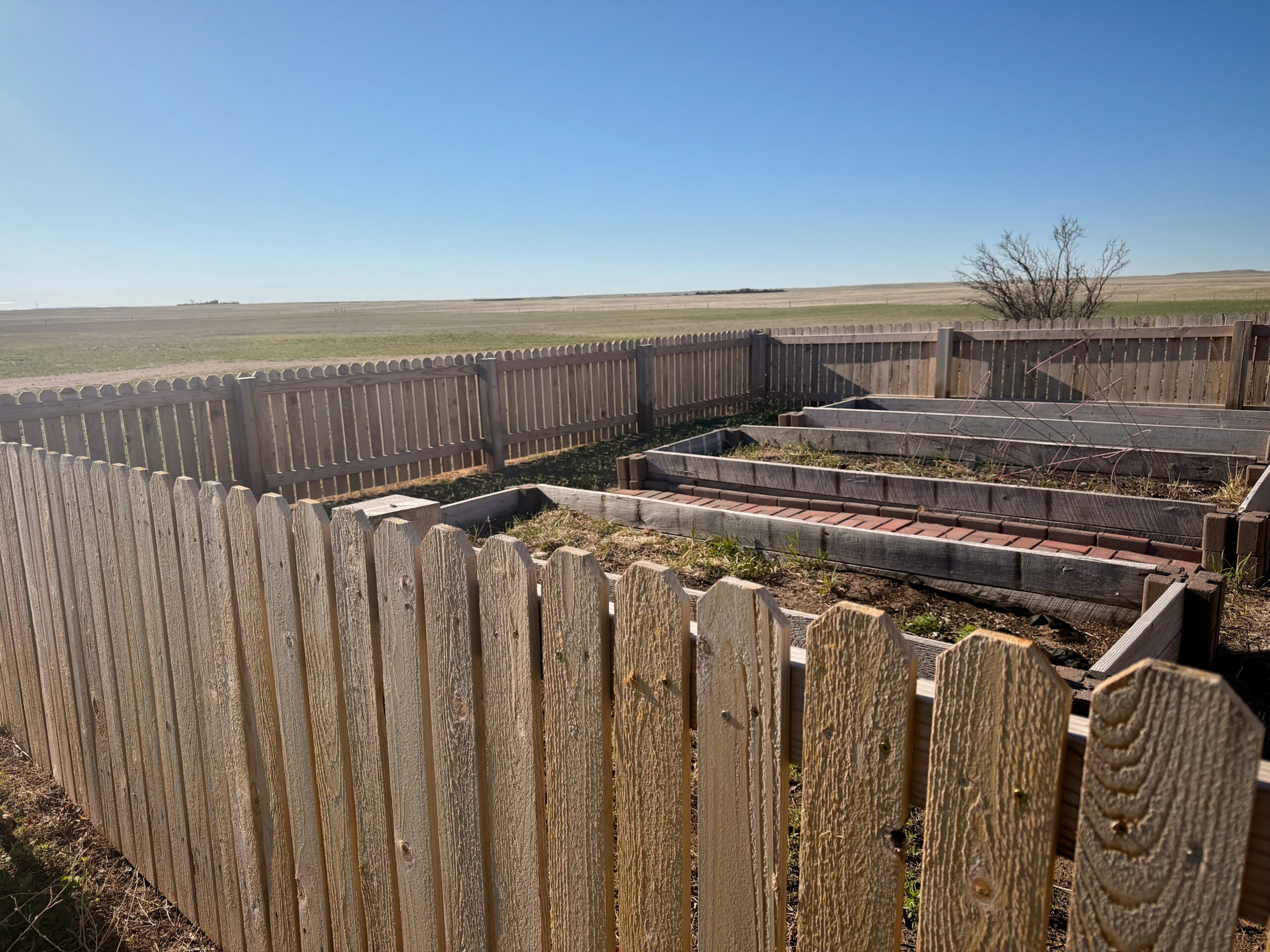
It’s nothing grandiose. At least not yet. Perhaps for the first time in my life, I’m okay with not having it all figured out — either in my garden or in the rest of my life.
Over the years, many of you have asked how I’d start a new garden if I had the chance. I’ve written blog posts and recorded podcasts on the topic, but it’s always been theoretical. Now I get to live it. And you get to come along.
I’m sure my plans will shift a lot over the coming months, but right now, this is my starting point:
(Btw, this post is sponsored by True Leaf Market, my longtime source for vegetable seeds, cover crops, and more. I’ve had a long-standing relationship with them, so it felt like such a full-circle moment to have them sponsor this new season of mine. But even when they aren’t sponsoring, they are still where I get all my seeds.)
First, I’m going to observe the spaces before I overhaul them.
I want to watch where the sun hits and where water collects. I’ll pay attention to my walkways and how I naturally move across the land as I add chickens and horses and cows back into my daily rhythms. I want the land to talk to me before I start locking myself into permanent infrastructure. In my previous homestead I made the mistake of building too fast, which resulted in moving fence lines multiple times and other fun ventures. I’d like to avoid that here if possible.
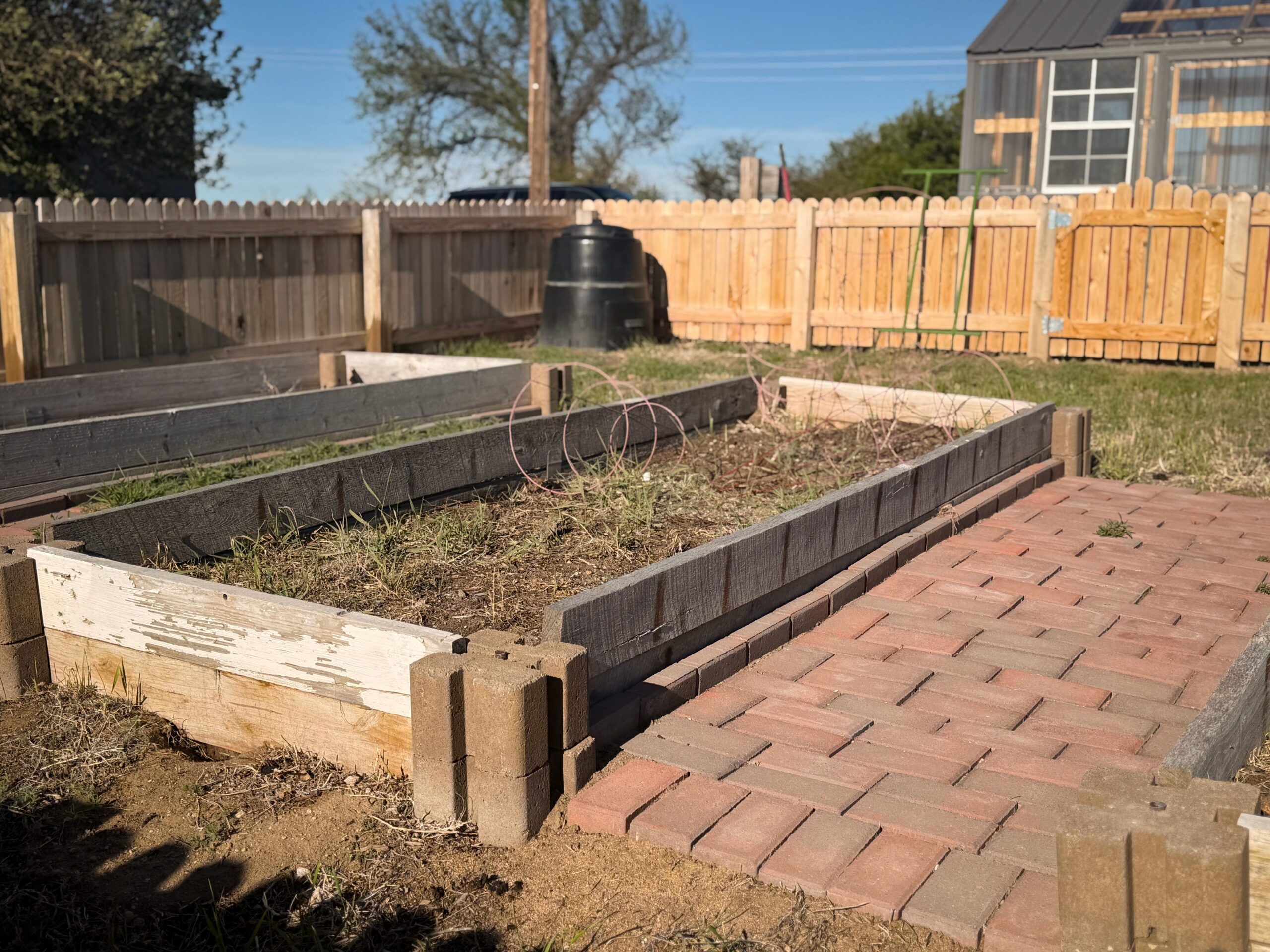
Next, I’ll test the soil so I know what I’m working with. From my initial walks through the pasture, I think the composition is more sand than the heavy clay I had in my last gardens. I don’t think this new plot has been planted much, so I’m guessing the nutrient levels will be decent, but I want to know for sure.
I’m going to keep the little wooden beds. They are crooked and quaint but I don’t care. I like them. I’ll loosen the soil with my broadfork and probably add a few bags of garden soil this year to top them off. Nothing fancy— just enough to get us going.
This year my vegetable list is far more minimal than usual, but it feels good.
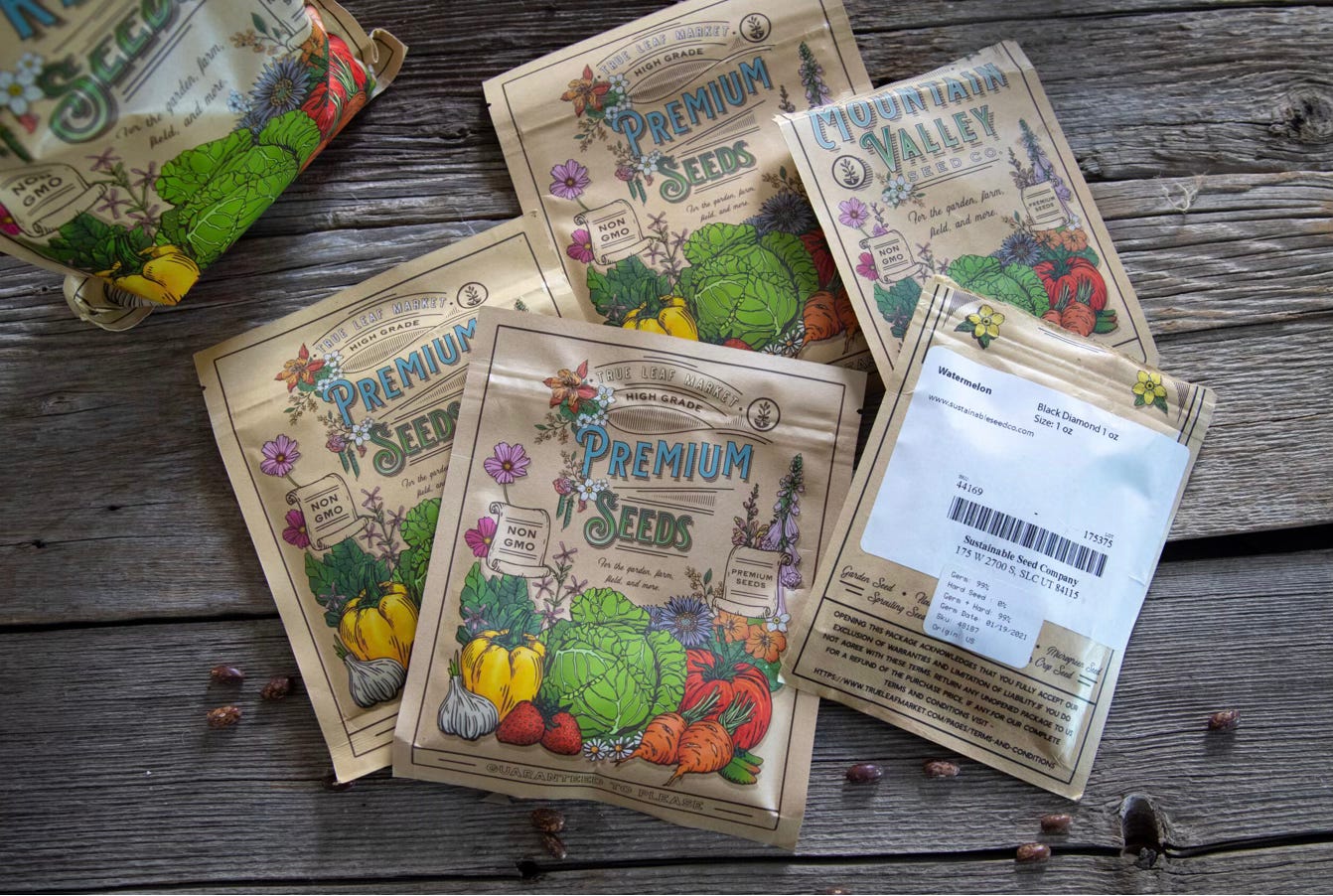
I had quite a few seeds left over from last year’s stash, but I placed a small order with True Leaf earlier this spring to fill in the gaps.
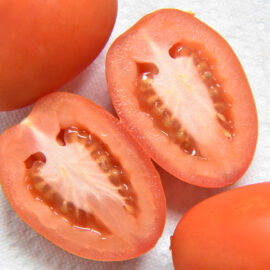
I started a few San Marzanos (because I am still me…), but I don’t feel the need to can dozens of jars of sauce this year, so I also planted the fun varieties I usually ignore when I’m in “must grow 400 lbs of canning tomatoes” mode — Isis Cherry, Black Krim, Brandywine Pink, and a couple others I forgot.
And I’ll transplant my bell peppers, jalapeño, and Anaheim starts to the beds as well.
If there’s room left in the beds, I’ll tuck in Butter Crunch lettuce, spinach, and arugula for garden salads. (Maybe with a bit less overwhelm, I’ll actually remember to harvest them before they go to seed this year…)
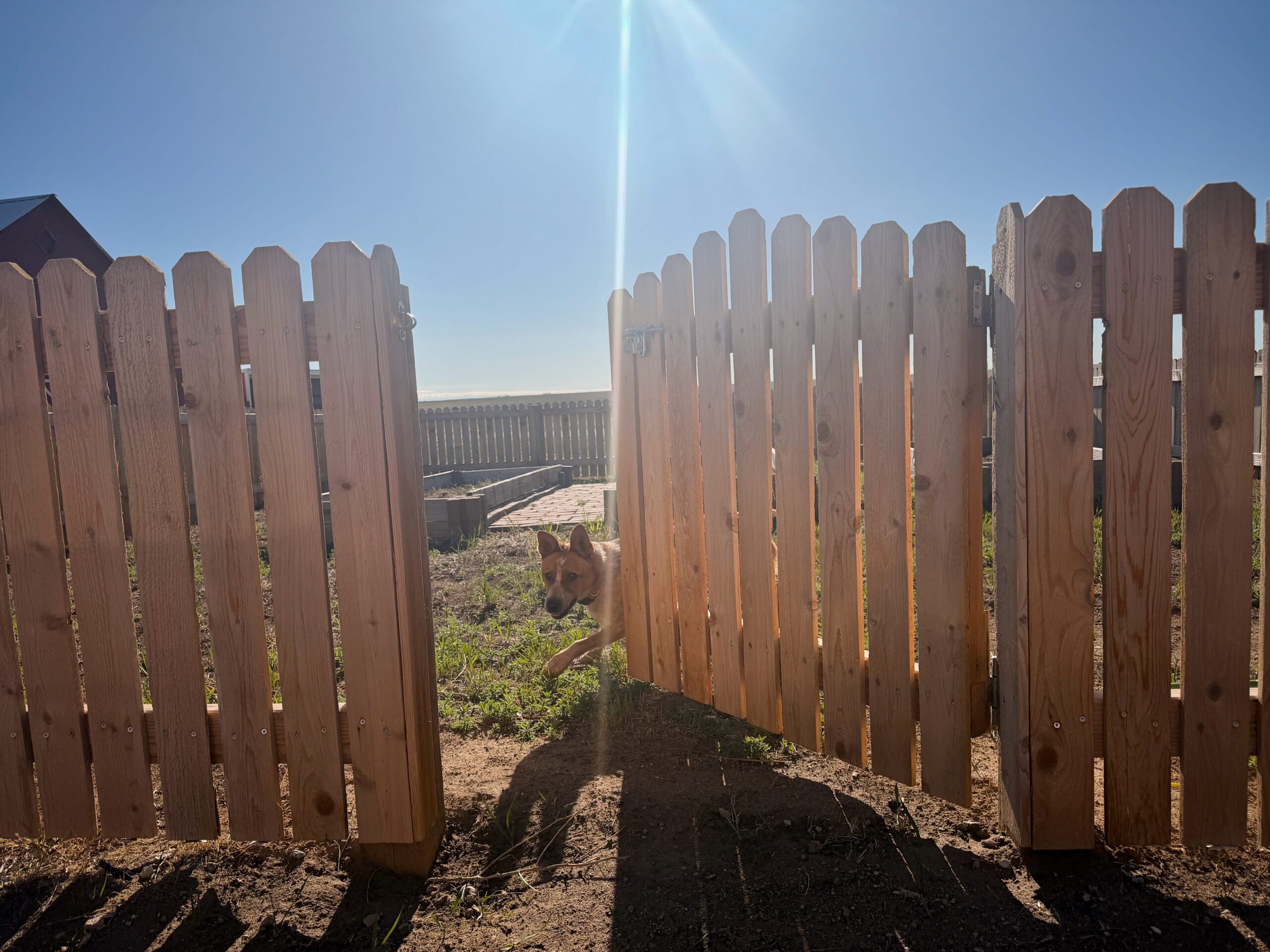
There’s a lot of possibility around the little picket fence, but I have no desire to rototill, so I’ll use my broadfork to loosen the soil, then hand-dig small pockets for the things that want to sprawl. I ordered Early Silver Line Melons because I’ve never tried them before, and I’m curious to see how they’ll grow here. I’ll plant Sugar Pie Pumpkins too, because I have a hunch making pies will feel good this fall. I’ll find a spot for a few potatoes and onions too, because they are my emotional support vegetables.
And I’m sprinkling in flowers wherever I can.
At the other house, I had a lovely rhythm of self-seeding calendula and marigolds. I brought some of those saved seeds with me. I also bought a zinnia collection from True Leaf that made me ridiculously happy when I opened the package, but I think I’m late for planting them this year. So those will wait until next spring, which is okay. Not everything has to happen immediately (which I’m reminding myself of a lot right now…) Some beauty can wait its turn.
Since the garden itself is simpler this year, I’ll also have more bandwidth to think about the soil after the main season is done.
You’ve heard me talk about cover crops for years, and that’s one place I’m especially excited to be more intentional this fall. Depending on how the beds feel and what the soil test shows, I may use winter rye if things seem compacted, red clover if I need nitrogen support, or one of the all-in-one cover mixes if I want to cover all my bases.
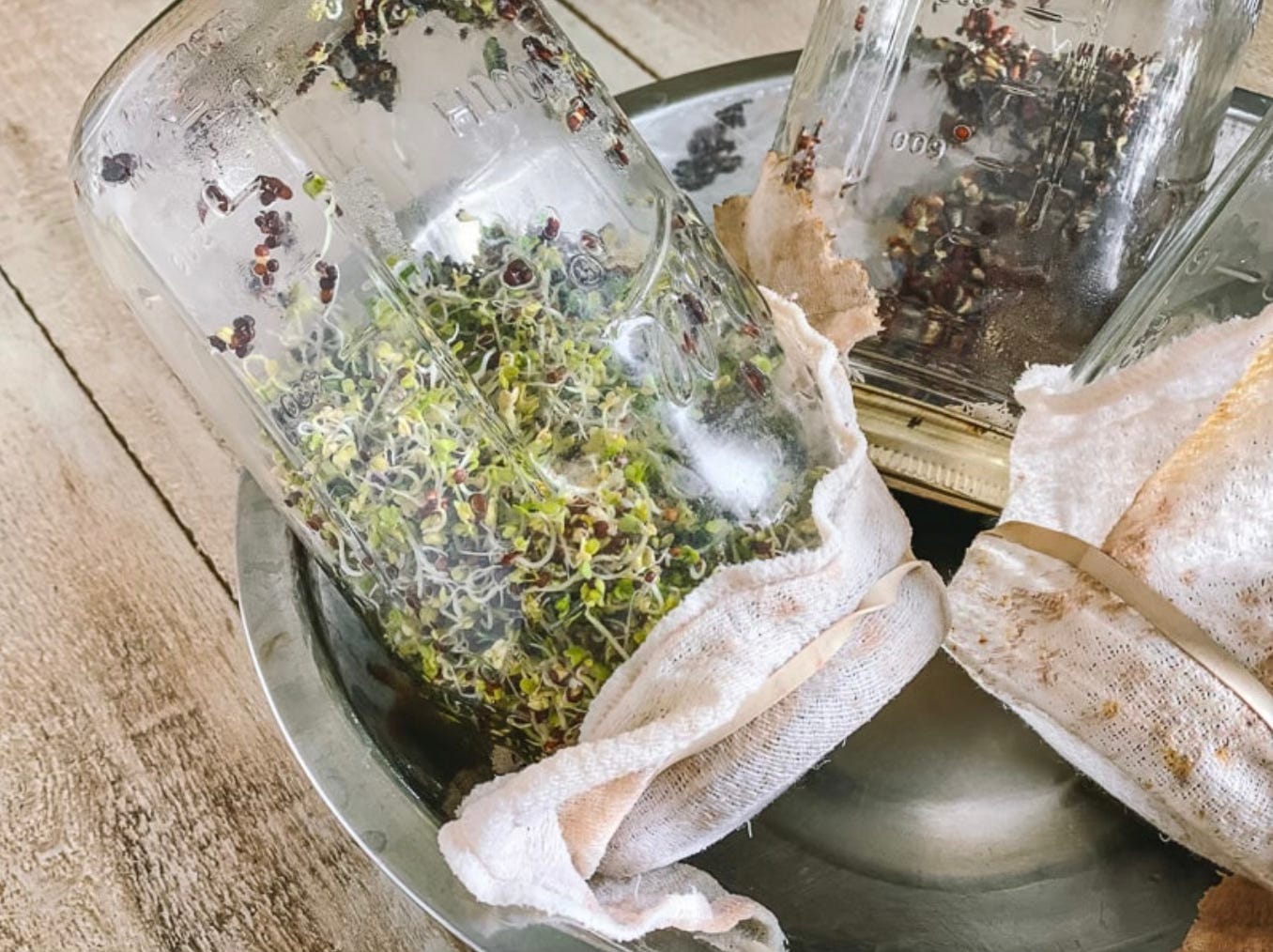
Oddly enough, I found my sprouting kit while I was packing and felt the strangest spark of inspiration to use it again. Normally, I don’t touch sprouts during gardening season because there are enough green things to care for outside. But I feel like I need something alive and growing inside these unfamiliar walls while I figure out how to make this house feel like home. So I’m starting up a small jar of sprouts on the counter for salads and sandwiches.
Perhaps that’s the theme of this whole season for me: small, living things. Not giant harvests. Not impressive systems. Not a performance or a productivity project or a test of whether I’m “homestead enough.”
This year, the garden is for me.
For steadiness. For beauty. For a reason to walk outside in the morning.
For the reminder that even after endings, life keeps pushing upward.
I am not trying to recreate the old garden.
I am not trying to force the old life into the new space.
I am not trying to prove I’m unchanged.
This garden gets to be different because I am different.
I don’t know exactly what these new spaces will become yet.
But then again, I don’t know exactly what I will become yet either.
And maybe that’s the whole point.

Leave a Comment