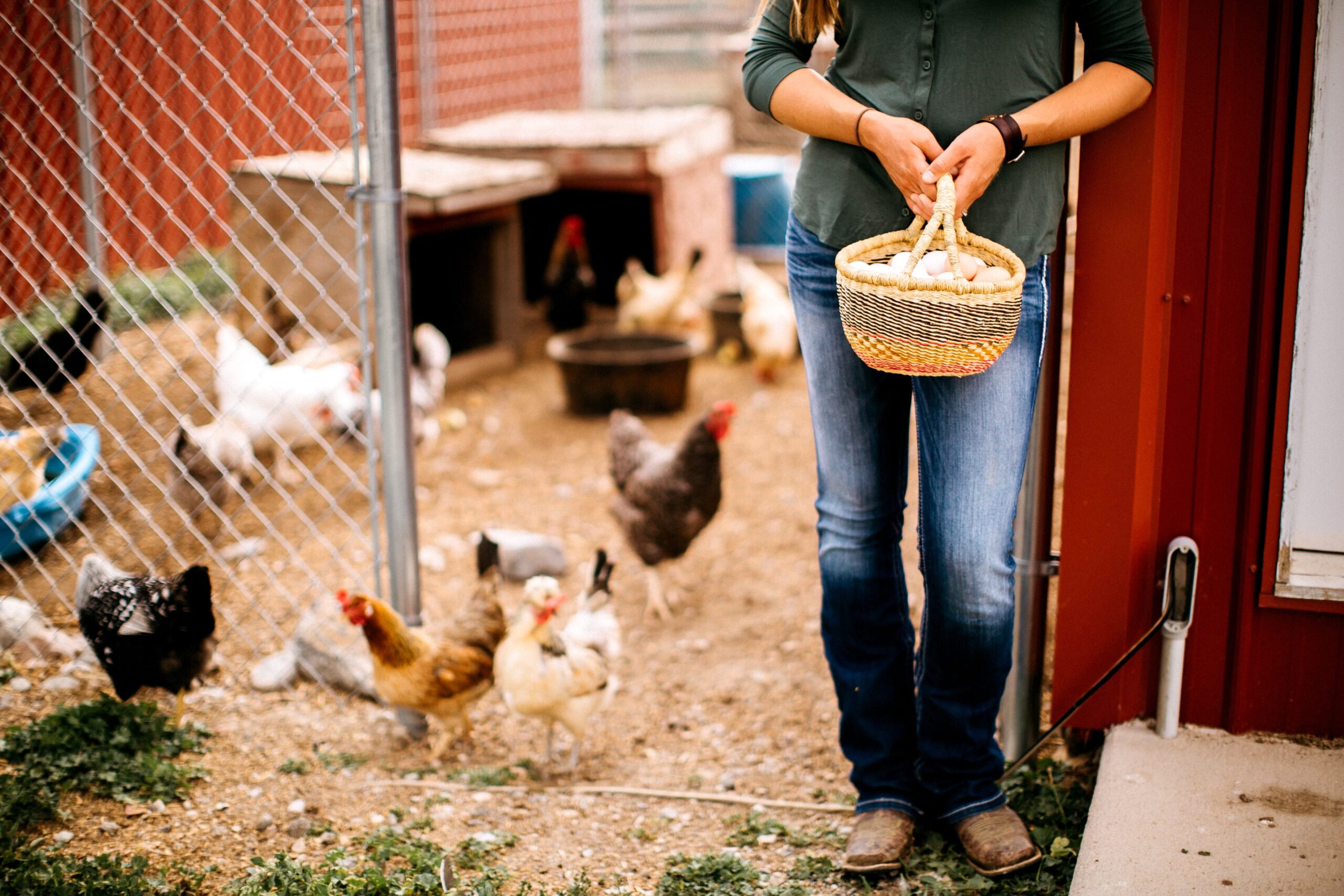
I’ve been wanting to talk about this for a while…
At the risk of sounding like a crotchety old gatekeeper, I haven’t… However since I’m forty now and have seemingly lost my fear of saying things… I’m going to say it today.
I’ve hinted at this in a few recent posts and podcast episodes, but it feels like time to put it in one place: After fifteen years of promoting and advocating for the homesteading movement, never in a million years could I have imagined feeling this turned off by it.
Not because I don’t still love the essence of old-fashioned things. But because I’ve been sitting here asking: what the hell happened?
I’ve been trying to sort through how much of this is the movement changing, how much is me changing, and how much is just the natural lifecycle of anything that gets popular…
And while I don’t have all the answers, I do have fifteen years of watching this movement up close. So these are my humble observations. Take what’s useful. Leave the rest.
The Happy Beginnings
We bought our 67-acre property in 2008—long before homesteading was cool… Before I was even using that terminology. Before mason jars were hawked on every corner and backyard chickens became a status symbol.
Back then, there was a humility to it that I loved. A rawness and truth you couldn’t manufacture.
Homesteading wasn’t a brand. It wasn’t a costume. It wasn’t a political dog whistle. It was simply people like me learning how to do stuff. People trying to feed their families in a more human way than stale, industrial life had ever offered. People resurrecting old skills and sharing what worked—not because it was trending, but because it woke something in them that had been sleeping for a long time.
It felt deliciously rebellious and forbidden and countercultural. And I fell head-over-heels in love with all of it, like I’d finally found the missing piece I’d been searching for my entire life.
And I very happily rode that wave for over a decade….
So What Happened?
There’s an arc to movements.
It starts with early adopters—the pioneers, if you will. They are the ones curious enough to question the status quo, to stick their necks out, and to get mocked while doing it.
They will forever be my people.
But then… the ideas catch on. The middle of the curve arrives. The thing gets popular. The thing gets normalized. And then… it goes mainstream.
And that’s the moment I lose interest every time.
Because when something crosses into mainstream, it grows, which is good (mostly). But it also gets commodified, simplified, and flattened. And suddenly the once revolutionary thing is reduced to a punchline and a template.
That’s where I see homesteading now: An idea that used to be alive and varied and place-based has been boiled down into a recognizable “look” you can buy, perform, and broadcast online.
Which brings me to my main culprit…
I Mostly Blame the Internet
I’m not dogging the power of the internet (that’d be wildly hypocritical, considering I ran one of the foremost homesteading blogs for years). Ironically, I don’t think these old-fashioned skills would have spread the way they did without laptops and Wi-Fi stitching us together. (I also acknowledge the irony that as a “homestead blogger” I was one of the people helping the movement gain traction….)
But the very tool that helped the movement grow also warped it.
Because the internet doesn’t reward what’s true. It rewards what’s digestible—and digestible means fast, simple, and easy to categorize.
Now, yes: vulnerability can do well online (especially now). Real stories can hit. People are hungry for honesty. But even honesty has to be packaged with a bow.
It has to fit inside a caption. A reel. A headline. A hook. A tidy beginning and ending.
And homesteading—real homesteading—resists that.
It’s seasonal. It’s complicated. It’s monotonous. It’s one step forward and three steps back. It’s failed loaves of bread and hail-torn vegetable plants and dead baby goats lying in the dirt. Every once in a while it’s stunningly aesthetic with all the warm-and-fuzzy-feels. But the rest of the time, it’s gritty and dull and raw.
But the algorithm marches on… And it prunes and picks, as it always does:
So the pretty parts float to the top. The tidy stories that fits in a caption. The polished 1-2-3s that can be packaged and sold. And most of all, if it can cause a brawl in the comment section, that’s internet GOLD.
That doesn’t mean we shouldn’t share things online, but it’s wise to be aware of the skewing that happens on social media.
Homesteading’s Rocket Launch
Before COVID, homesteading was growing slowly but steadily. During and after COVID? It got strapped to a rocket.
I remember telling my husband in early 2020 when the virus hysteria was still ramping up, that I wasn’t sure people would care about my quaint homesteading content anymore.
I guess prophecy isn’t my calling….
Because when the world wobbles, people look for something solid. They want a sense that if everything falls apart, they have a semblance of control. And homesteading was that control.
And they came to the movement in droves.
Some came in for legitimate, beautiful reasons. Some came in scared. Others came in bored. Some came in because the internet served them a fantasy: simple life, pretty kitchen, happy family, bread rising on cue.
And when a wave comes in like that, it changes the whole ecosystem.
Newcomers aren’t bad… after all, new people are how movements grow. But a big surge of attention does two things at once:
It creates an overwhelming hunger for answers… and it creates a huge opportunity to sell them.
Suddenly we didn’t just have people sharing skills. We have people optimizing for attention… Companies packaging and pandering to an identity… Creators feeling pressure to perform a version of the life that fits neatly on a screen.
Once a lifestyle becomes a template, it becomes a cash cow—for marketing, for status, for political tribalism, or for whatever message someone already wanted to sell.
When Skills Become Status
This is the shift that makes me want to throw the whole thing in the trash some days.
Homesteading used to be: “I’m doing these things because they work. Because they matter. Because I want to feed my people. Because I want to create a life that means something.”
But now, seemingly, much of the homesteading motivation is: “I’m doing these things so you know which club I belong to.”
Barf.
The innocent joy of old-fashioned skills got traded for a scorecard of political alliance, performance, and moral hierarchy—and I’m out.
If you were here for the real thing, watching it become internet dress-up is… disheartening.
But I’m Not Entirely Cynical….
If I could wave a magic wand, I wouldn’t erase homesteading.
After all, it’s not a monolith—online just makes it feel like one. There still are plenty of people simply doing the things… not performing, not posturing, not turning bread into a political billboard.
I wouldn’t even erase the aesthetic stuff. Beauty isn’t the enemy. (Although I just cannot with the prairie dresses in the mud, y’all. I cannot.)
But I’d bring us back to the center. Back to the point.
Homesteading isn’t a political party.
It isn’t cosplaying a subsistence lifestyle.
It isn’t a meme.
It’s a set of skills that make humans more resilient. It’s learning how to do things with your own two hands. It’s competence in a world that wants us to be dependent. It’s showing up for your life instead of going through the motions.
And it’s still one of the realest things we can chase in a world desperate to force us into sterilized, machine-driven, AI-generated lanes.
So for those of us who still feel the glimmer of excitement at the thought of hands in soil, face to the wind, no screens in sight… perhaps the best thing we can do is to simply drop the labels and keep doing the work that matters to US.
Growing food. Using our hands. Choosing analog when appropriate. Staying human. Building a life that’s less brittle—in our own way and on our own terms.
Even when the internet makes everything weird.
Perhaps, especially then.


Leave a Comment