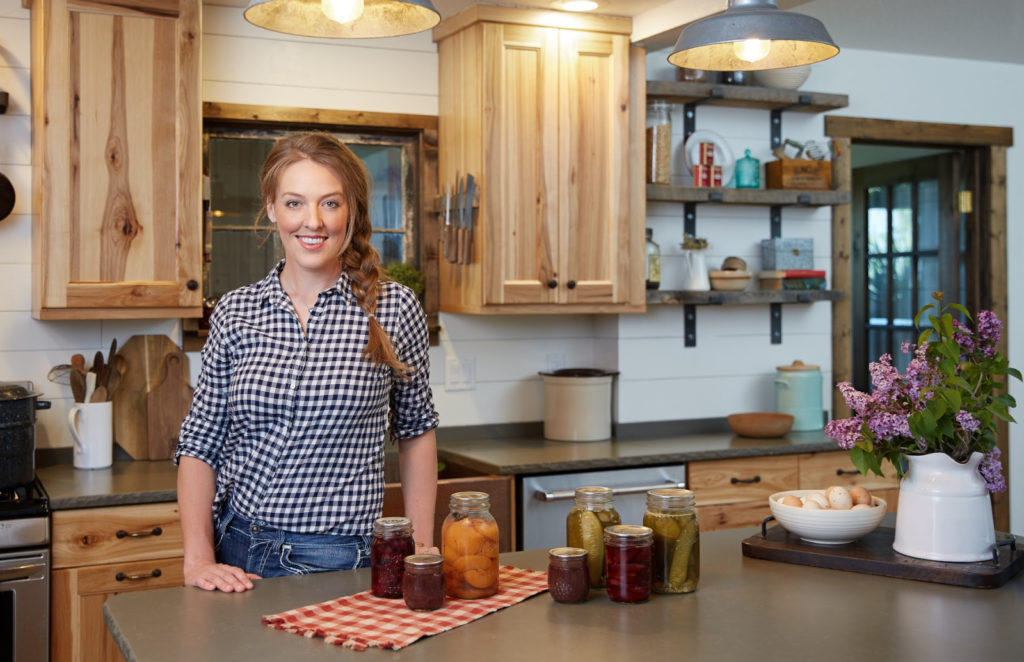
I don’t cook like I used to.
Actually, let me rephrase that. I cook a ton. I own a restaurant, and I just finished the manuscript for my second cookbook (it’s coming in October—eek). I cook every single day for many people.
But my personal cooking rhythms have drastically changed over the years.
I don’t know why that’s surprised me. I guess I naively assumed I’d be in the same little kitchen pattern forever. But life changes, and I now find myself with three (busy) older children, shifting businesses, and a more community-focused life than I ever envisioned.
The common belief, if you live a life like mine, is that home-cooked food isn’t possible…
…which is a rational and reasonable train of thought. Yes, it’s certainly harder to cook when you’re not home all day. And yes, I succumb to convenience more than I used to.
But the tension for me is that I still like cooking. I still love the process. And I still stand by the fact that it saves money, tastes better, and is healthier for us.
It just has to be on my terms these days… which means that anyone else’s system, spreadsheet, app, or color-coded meal plan absolutely does NOT work right now.
(Okay, let’s be honest— they’ve never worked for me… even in my most classic homemaker-ish era… but especially not now.)
So how DOES one cook in the midst of a somewhat full and slightly feral life?
I’m so glad you asked.
I don’t know.
Kidding… sort of. I’m actually do have some answers for you. Maybe.
But the answer certainly hasn’t been to strategically prep seven coordinated meals in matching glass containers on Sunday evening with pretty labels which I store in a spotlessly clean and organized refrigerator.
(Not only NO, but my fridge resembles a war zone complete with half-wilted celery, unidentified leftovers, and mysterious mason jars full of things I swore I didn’t need to label.)
Anyway, I’ve started to realize the problem wasn’t necessarily me. (Okay, maybe it is me… but I digress.)

The problem was me trying to force my life into a system that only works when the schedule is tidy and predictable. And my life is NEVER tidy or predictable.
So I decided to cook in a way that fits the life I actually have.
And that required a considerable flipping of the script. Aka: I don’t start with a recipe; I start with the ingredients that are in my fridge, pantry, freezer, or garden.
Yes, I realize that may sound obvious to some of you, but I don’t actually think it is. If it were, people across the country wouldn’t still be standing in front of their fridge every evening wondering what to make for dinner.
But this little, perhaps obvious shift, is everything. A pound of ground beef (or random bowls of browned beef left in the fridge) can become tacos, pasta, soup, a skillet meal, or something involving potatoes (always, always potatoes) if that’s the kind of day we’re having.
A bowl of leftover rice is a head start— not a cast-off.
The lingering veggies in the produce drawer can be rescued with a hot pan, a jar of broth, generous amounts of garlic, or a handful of cheese.
Basically, I’ve stopped asking, “What recipe am I making tonight?” and ask, “What can these random, somewhat eclectic ingredients become?”
It’s such a simple shift, but it’s changed everything. And it’s made me a better cook, too. Because when you stop needing an exact recipe for every meal, you start to see the patterns:
Soup is a pattern.
Tacos are a pattern.
Pasta is a pattern.
Hash is a pattern.
Once you know the patterns, you can just start building, and cooking becomes a fluid (dare I say magical?) process that borders more on art than science. It’s also how you get closer to that elusive, ever-mysterious “grandma cooking style,” where everything is measured by heart and tastes amazing with no recipe in sight.

You see, most of us were taught how to follow recipes, but NOT how to think in meals. How to open the fridge and spot possibilities. How to work with what we have instead of constantly running to the supermarket. How to turn a chaotic evening into a decent dinner anyway.
And THAT kind of real-life kitchen confidence is worth so much more than another pretty meal plan printable.
Now, just to be clear—I’m not anti-planning. But my planning has to be painless, (which means if it takes more than 90 seconds, I’m out). I can muster the energy to I write out the next two or three days’ worth of rough dinner ideas at the top of my planner. That’s it.
But because I think in patterns—not color-coded shopping lists or rigid recipes—it takes hardly any brainpower, which deeply matters to me these days.
My other big shift: I’ve stopped expecting every meal to be ultra creative.
Many of us have absorbed the idea that being a good cook means constantly reinventing the wheel—new recipes, new flavors, new ideas. But real-life cooking is far less glamorous than that. It’s repeating yourself a lot, relying on a handful of fallback meals, using up what’s in the fridge before it dies a slow death, and figuring out how to turn leftovers nobody wants into something people will actually eat. Mostly, it’s learning to make peace with “good enough” more often than your fantasy self would prefer.
But oddly enough, I’ve discovered I prefer cooking this way more than anything else. There’s a sort of alchemy to it that inspires me—the challenge of looking at what I have, knowing the constraints, and still making something good out of it.

That, more than anything, is why I built Meal Craft.
It didn’t come from some color-coded kitchen fantasy. It came from years of attempting to answer the same question over and over again: how do I feed people well when life is full, I only go to the grocery store twice a month, and I’m operating in a near-constant state of decision fatigue?
Eventually, I realized I didn’t need more recipes. I needed a different way to think about supper.
A way to look at what I already had and turn it into dinner without needing a brand-new Googled recipe, a perfect grocery haul, or some imaginary reserve of mental energy I did not possess that day.
That has been far more useful to me than rigid meal planning ever was.
So if you’ve struggled with meal plans in the past, maybe you don’t need a stricter system or more willpower.
Maybe you simply need a plan with a little more grace woven into it…
One that flows with real life…
One that helps you look at what you already have and say, okay… now what can this become?
If this way of cooking sounds like the kind of relief you’ve been craving, that’s exactly why I made Meal Craft. It’s the frameworks and systems I use to make supper work in the middle of real life, and maybe it’ll help you do the same.
—Jill





Leave a Comment