Seriously. Why have I not tried this sooner? For some unknown reason I have put off sprouting seeds for almost a year. I guess I thought it would be complicated or something? Well, I can now report that sprouting seeds might just be the simplest thing I’ve done since I started cooking real food!
In my opinion, this is just an absolute must for any person interested in more healthful eating. Why?
1. These little seedlings are packed with nutrition! Through the sprouting process, you are technically turning your “grain” (bean, wheat, alfalfa) into a veggie. The vitamin content is greatly increased and the seed is made much more digestible.
2. It’s incredibly frugal! It only takes a handful of seeds to make enough sprouts to fill an entire mason jar. Things like beans or lentils are super inexpensive to begin with, and when you figure in the amount of nutritional benefit you get from them after the sprouting process, it is a pretty impressive pay out for just pennies!
3. They are in season all the time! You can grow these little guys in your kitchen 365 days a year, no matter what type of climate you live in. Plus, they don’t require a garden spot, or even a balcony, so even the tiniest apartment dweller can partake!
4. It’s just plain fun! This would be an awesome science project if you have children- I definitely plan to do sprouting experiments when our kids are old enough. It’s fascinating to think that those little seeds carry all the information they need to turn themselves into a plant and therefore completely change their nutritional impact. And all they needed from me was a clean jar and a little bit of water! That alone is enough to convince me that evolution is impossible. What an brilliant Creator we have!
My method:
I must admit, I was decidedly unscientific about my approach to sprouting. So if you are looking for a more precise, step-by-step formula, I apologize. Fortunately, I think sprouts are rather forgiving and they certainly didn’t seem to mind my laid-back approach.
I chose to sprout alfalfa seeds and lentils for my first time. It’s a good idea to choose organic sprouting seeds, since you will be eating them directly and don’t need to be ingesting any chemicals that regular seeds may have been treated with.
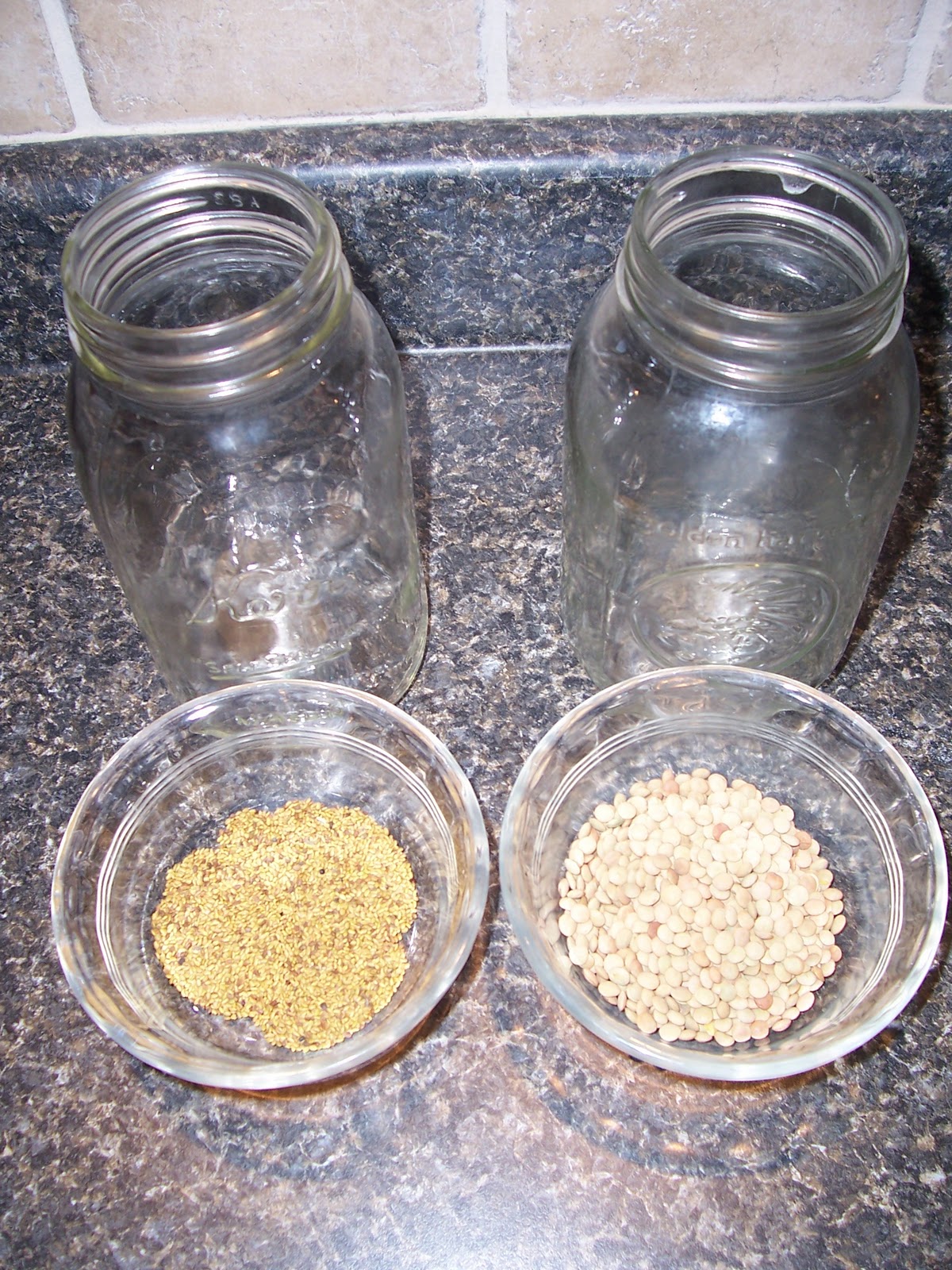

Next, I filled the jars with enough water to sufficiently cover the sprouts, covered them, and went to bed.
(I used a piece of muslin-style cloth to cover them. I figured they needed to “breathe”.)

The next morning, I drained and rinsed them thoroughly. I was hoping my muslin fabric would work as a screen for draining… Not so much. So, I ended up dumping them into a small strainer and/or colander for the washing.
I repeated the rinsing process twice daily, morning and night. This helps to keep the seeds moist, which is essential for germination, as well as preventing the growth of any mold.
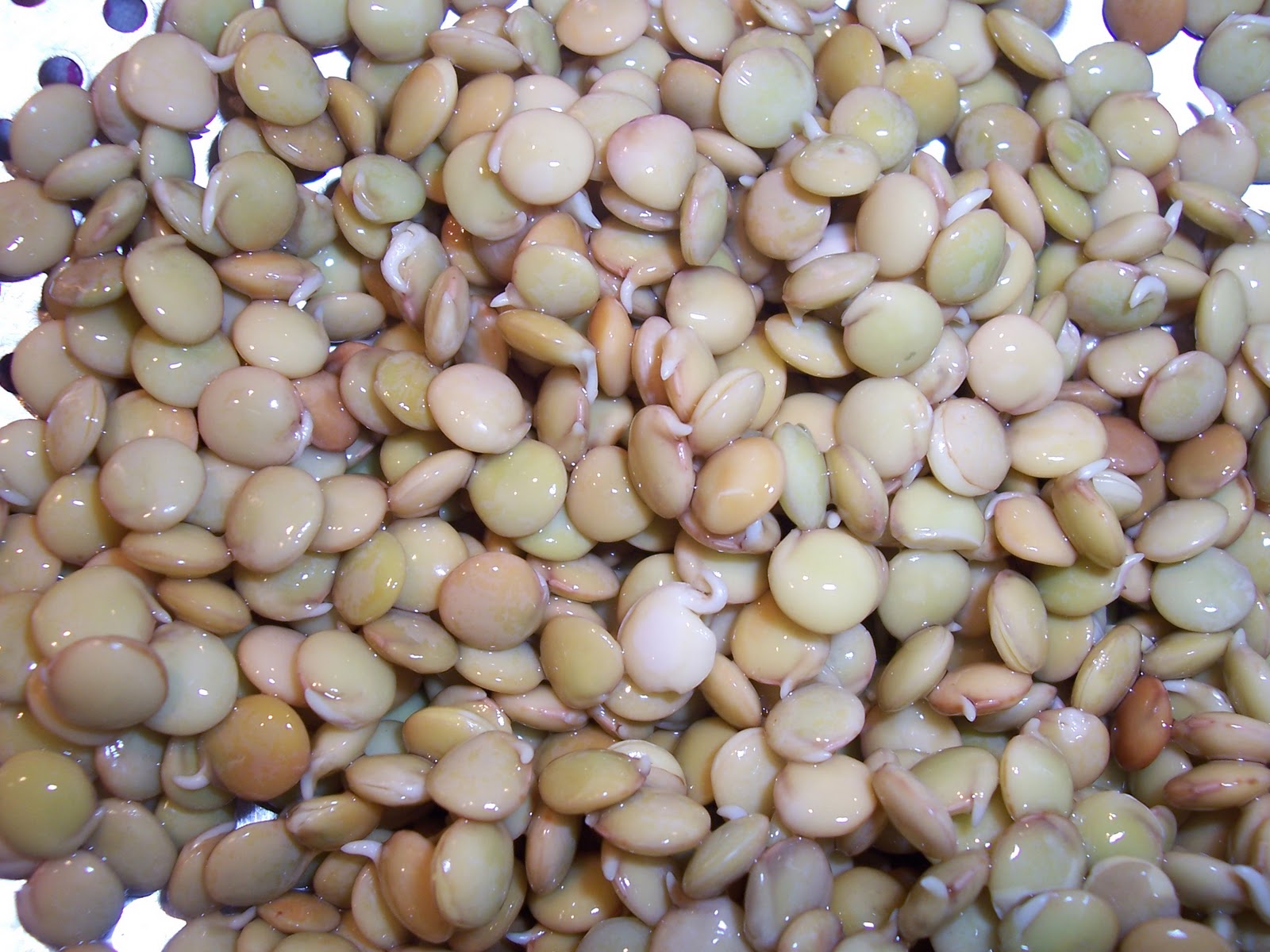
The lentils, day three. Life!!
Now, you could eat these guys right now. Or, you can let the tails get a bit longer. It’s totally up to you. I decided to wait.

Here we are, day five, I believe. Seriously, it’s like a sprout riot! They are out of control!
I ate them at this point. I put the alfalfa sprouts into a ham, cheese, and hummus wrap. Yum!
I probably let the lentils go a bit longer than I should have, but they were still excellent.
I chopped them up (just so the tails wouldn’t be alarming to the hubby…) and threw them into a winter soup. Excellent. This was my husband’s first time eating any type of sprouts, and he didn’t seem to mind.


I really enjoyed your post and I intend to try this method. Thank you so much for sharing the information and the step by step photos. Have a very Merry Christmas!
I found your site via Cultures for Health, and I'm so glad I did. I've wanted to try sprouting for a long time, but I've been intimidated by it. I'm so glad you admitted you were too and found it easy! I think I may start tonight . . .
Thank you!
Thanks for sharing! It looks so easy! I wonder if I could hide the sprouted lentils from my hubby…. 🙂
Great post! I'm twittering it. I love sprouts and sprouting, I haven't done it all year since being on the GAPS diet but I might get back into it and ferment the sprouts like I used to afterwards, this is my sister and her 2 year old (at that time, he's 5 now!)…
http://www.helladelicious.com/shows/2009/07/mob-102-pickled-pink/
Thanks for this post! And thanks for sharing with Dr. Laura's Tasty Tuesday. I had bookmarked it and now have come back because I'm sprouting this week 🙂 Thanks so much!
Dr. Laura
I love sprouting! I use to grow them just like you did in mason jars, but recently was introduced to a sprouter. I was given mine, but they are only like $20 on Amazon and are well worth it! It is great, there are three tiers and water filters through each layer. http://www.amazon.com/Victorio-VKP1013-Three-Tray-Kitchen-Sprouter/dp/B000N03EK0/ref=sr_1_1?ie=UTF8&qid=1325776769&sr=8-1 If you are still doing sprouting, I would definitely suggest getting one! It seems to rinse them much better then jars and they grow more evenly. Thanks for the post!
Hmmm… Will have to check this out, Emily! Thanks for the heads up!
Very cool. I just need to find alfala seeds online somewhere….any other seeds you can suggest to sprout?
Oh yes!
Broccoli and radish are good, too. Just make sure to buy seeds specifically sold for sprouting, not “garden” seeds.
And you can definitely do beans/legumes too– lentils, pintos, garbanzos, etc. The sky is the limit!
What would be the difference between a sprouting seed, say alfalfa, bought for that purpose, and a seed that is advertised as organic/non GMO?
Sprouting seeds are expensive. It seems overly so…Your thoughts on this? Thank you! Loving your site.
Usually people avoid sprouting regular seeds b/c of the chemicals that are used on them. However, if you know for a fact that the seeds were completely un-treated and organic, it’d probably be just fine.
Thanks! I started my lentils yesterday and they are already sprouting (so exciting). I got a great deal at the grocery store and am thrilled to know that I can sprout seeds from the bulk bins at places like Earthfare. Awesome!
I’ve been kind of intimidated by this and really had no clue where to start. This looks so easy and I love sprouts anyway. I have to add this to my list of things I want to do this year. Thanks for the easy info on how to do this. 🙂
You are welcome Tracy– you can do it! 🙂
Thanks Jill. One of these days I will try it. I have too many things on my want to do list.
I tried this, but they didn’t sprout. I didn’t drain it as often as you though. Maybe that was it?
It’s an amazing piece of writing designed for all the web viewers;
they will get advantage from it I am sure.